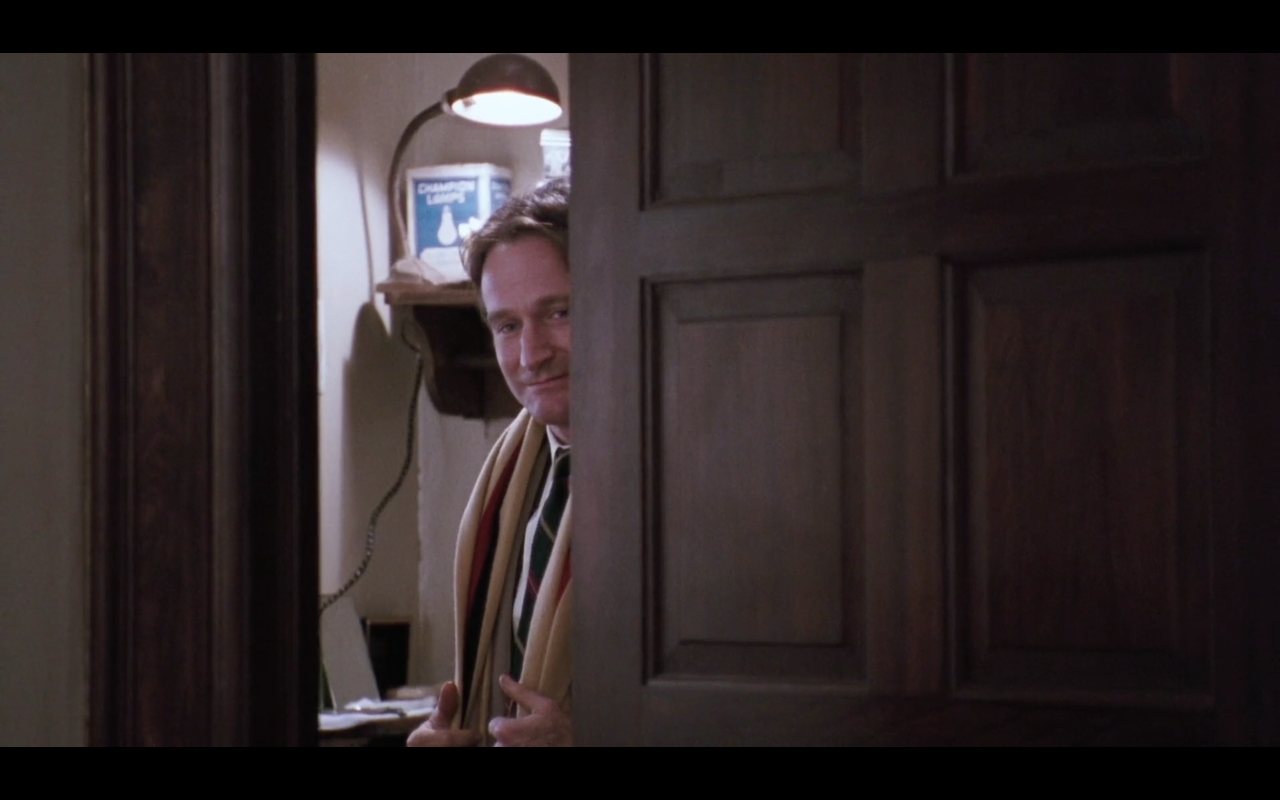
I don’t entirely know what to write on the subject and there has been plenty already written about it over the past two days; all I can say is RobinWilliams was truly one of the funniest and most talented actors and comedians around, able to put a smile on people’s faces even when he could not manage one himself. His suicide is a sad, sad thing, and while countless other, smarter people can write about his depression, past addictions, and other demons, I would just like to say thankyou to the man who played a large role in my childhood with his manically enthusiastic performances in Aladdin, Jumanji, and Flubber, and who taught me the lessons of perseverance, individuality, and sticking up for what is right in one of the most hauntingly beautiful films of all time, Dead Poets Society.
Now, any line from Dead Poets Society is worth quoting, but I will end this very brief post with this monologue (powerfully used in a recent iPad commercial) from one of Mr. Keating’s English classes:
We don’t read and write poetry because it’s cute. We read and write poetry because we are members of the human race. And the human race is filled with passion. And medicine, law, business, engineering, these are noble pursuits and necessary to sustain life. But poetry, beauty, romance, love, these are what we stay alive for. To quote from Whitman, “O me! O life!… of the questions of these recurring; of the endless trains of the faithless… of cities filled with the foolish; what good amid these, O me, O life?” Answer. That you are here – that life exists, and identity; that the powerful play goes on and you may contribute a verse. That the powerful play goes on and you may contribute a verse. What will your verse be?
I guess, subconsciously, my goal in life is to become as close to New York Post film critic Kyle Smith as possible.
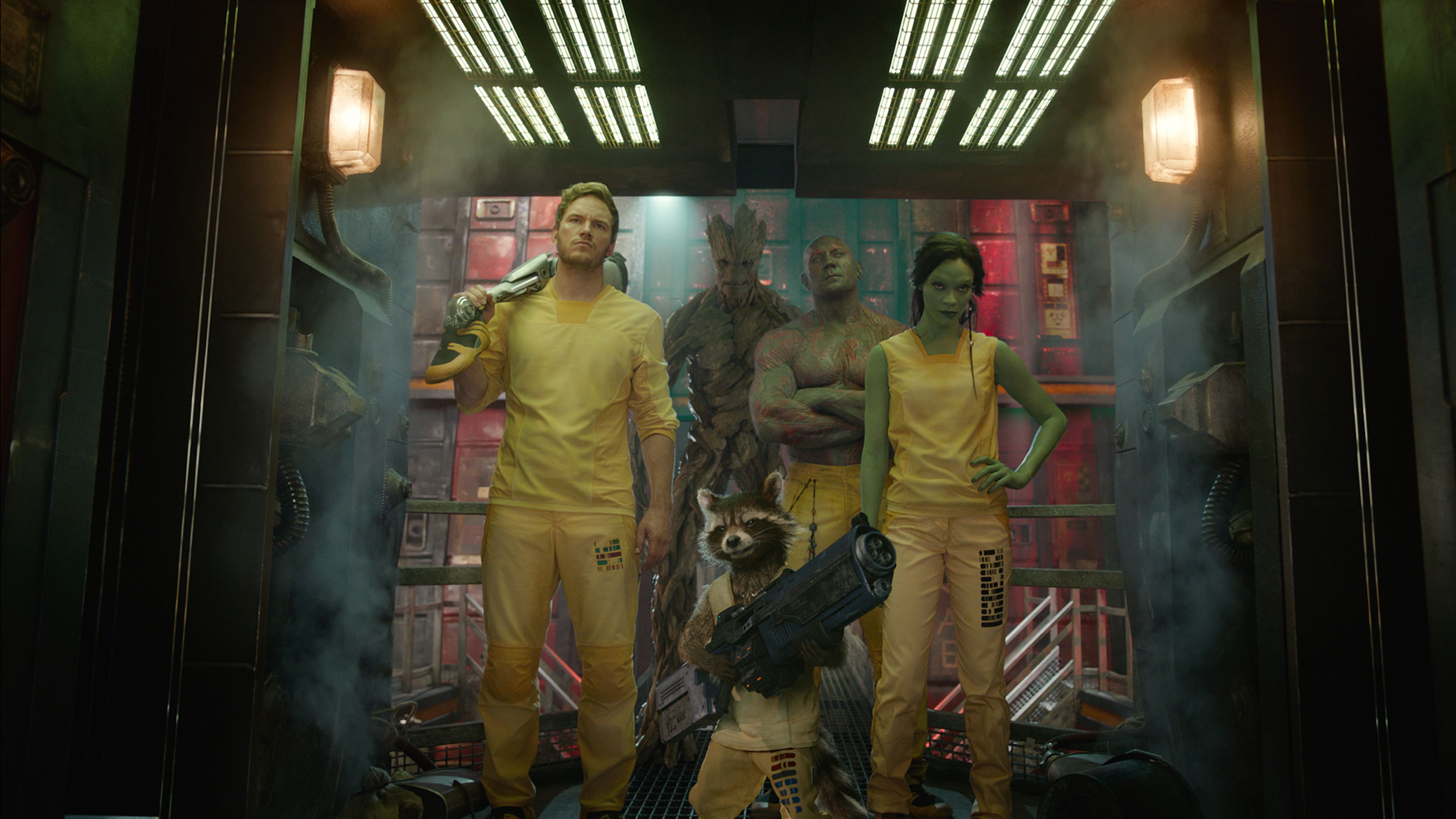
I saw a little movie called Guardians of the Galaxy yesterday morning, and following my recent trend of completely not caring for a movie that almost everyone else – critics, film buffs, and the average moviegoer alike – has loved and praised, I left the theater neither moved nor disappointed by the film that has a 92% rating on Rotten Tomatoes.
There is a point toward the end of the movie where deep-voiced, hooded, staff-wielding supervillain Ronan (which is all I can remember about him) raises his arms mockingly and asks a crowd of scared spectators something along the lines of “This is it? Your guardians of the galaxy?” and I found myself agreeing with him completely.
Really? This is the best blockbuster of the summer? What I’ve seen in headlines referred to as “Marvel’s Most Important Movie”?
I just don’t get it.
Now, I didn’t hate Guardians of the Galaxy. I can’t even say I disliked it. I laughed at some of Rocket’s lines, and generally appreciated Drax the Destroyer and his inability to understand metaphors, and immensely enjoyed that one Jackson Pollock reference…
But I did not care about the plot. About the race of Xandarians or whatever that Ronan was supposedly going to wipe out. I didn’t care about Benicio Del Toro’s cameo as The Collector, which tied into Thor 2 and I’m guessing ties into The Avengers 2 and other upcoming Marvel movies, and I didn’t care about the forced love story between Chris Pratt’s Peter Quill/Star Lord and Zoe Saldana’s Gamora. And then, once the film erupted into an excess of explosions and lasers and CGI ships and dizzying maneuvers in the climactic battle to board Ronan’s ship, my brain kinda-sorta just checked out.
In this regard, Guardians of the Galaxy might as well have been titled Star Trek3, as it felt exactly likeJ. J. Abrams’ reimagined, spectacle-filled, and ultimately soulless Star Trek, only this time with some Star Wars-esque clothing and sets. Chris Pine- I mean, Pratt’s womanizing, goofy scoundrel, Zoe Saldana as a hard-ass with a soft spot for said roguish space adventurers, an alien whose humor comes from not being able to understand human emotions and insinuations, and the growling, brooding, cookie-cutter alien of a supervillain out to disintegrate planets for some unknown or boring reason…need I go on? I can only PRAY Star Wars VII is not this generic.
Overall, Guardians of the Galaxy ties into my slight (and I mean slight) disdain with Marvel’s Cinematic Universe, which, while having a remarkable track record of producing a string of decent-to-good films without any major bombs, is all about the end game rather than the movies being made and released “in the moment.” Because Marvel has mapped out its movies for the next ten or so years, each movie released is somehow meant to tie into one, two, or five movies down the road. While admittedly cool to see coherence and a broad sense of continuity between films, as well as all the character crossovers and inside jokes and references to other films, it gets a little tiresome when you realize that none of the films can really stand on their own, and that when you do watch, say, The Avengers in the objective context that five or six other films had built up to this point, you’re almost guaranteed to think “Wait, that’s it? After ALL that?” Yes, these movies are all enjoyable on a superficial level, but think how much deeper they would be if focus were put on each individual film that together naturally build to a crossover film. This crossover would then serve as a compliment tothe films that preceded it rather than the end goal of the franchise. Maybe DC can do what Marvel has been unable to– Oh wait. Batman v Superman: Dawn of Justice.
As for my dwindling taste in movies, let me not stop with Guardians of the Galaxy. Just so people reading this post are even more upset with me, I will admit that this is the third highly-praised film that I have felt “meh” about in the last month alone. Guardians follows in the footsteps ofDawn of the Planet of the Apesand Boyhood (both also over 90% fresh on RT), but I would honestly say that I enjoyed Guardians a lot more than the latter two.
So… Am I just wrong? Or is everyone else wrong? Either way, I feel cursed, like I somehow found a chest full of Aztec gold that makes me indifferent to current universally-acclaimed movies.
All I know is that next time I decide to go to the movies, before I step foot into the theater, I need someone to ask me, ” Is spending $12 or $7 or even $1 worth it for a movie that will most likely disappoint you?” and then hit me if I answer “Yes.” Please and thank you. You will forever have my gratitude.
Philip Seymour Hoffman and Amy Adams in 2008’s Doubt
I’ve been debating what my first ACTUAL movie review for this blog should be: I could follow up my Disney Challenge Intro with my promised review of the Disney “Classical Era” films, or I could hold off on that for a little while longer and write about one of this year’s movies, such as Boyhood, The Lego Movie, Snowpiercer, or LifeItself, all of which I’ve seen over the last month.
Instead, I shall do neither.
Instead, I am going to write about a 6-year-old movie that I just saw for the first time last week.
2008’s Doubt, self-adapted from John Patrick Shanley’s 2004 play of the same name, combines two things near and dear to me: great acting and Catholicism. Surprisingly, the Catholic nature of Doubt is treated objectively and respectfully, even amid its heavy subject matter, which is quite rare in a mainstream Hollywood movie. As an added bonus, Doubt features the late, great, and sorely-missed Philip Seymour Hoffman in a supporting role just morally ambiguous enough to leave the audience’s sympathies conflicted, resulting in a very tense and powerful movie experience.
Set at a Bronx Catholic church and school in 1964, Doubt tells the story of an alleged case of sexual abuse, although this serves as a plot point rather than the underlying theme of the film. Crotchety, strict Sister Aloysius (Meryl Streep) warns her younger, more liberal nuns to watch out for any misdoings around the parish or school after warm-hearted Father Brendan Flynn (Hoffman) gives a particularly striking sermon on the nature of doubt. Young, naive Sister James (Amy Adams) notices Father Flynn’s distinct attachment to new student Donald Miller, the only black boy in the school. After catching the boy with alcohol on his breath after a private meeting with the priest, she goes to her superior, who then makes it her “though-I-be-damned-to-hell” mission to find out the truth behind Father Flynn’s relationship with the boy. The battle of wills that ensues between Streep and Hoffman yields results and changes at the church, but not necessarily those one would expect. It also brings into question the film’s main theme, clearly outlined in the film’s opening minutes (oh, yes, and by its title), doubt, as well as the consequences of being resilient to the point of intolerance.
The four main leads, Streep, Hoffman, Adams, and Viola Davis as Mrs. Miller, the alleged victim’s mother, are outstanding, and all deservedly received Oscar nominations at the 2009 Academy Awards. Amy Adams exudes an innocence that struggles with the strictness of her surroundings, especially the overbearing, miserable presence of Sister Aloysius. She loves her students and is optimistic to the point where she cannot believe that Father Flynn would be a pedophile, let alone lie about it, even though she subconsciously must have had misgivings as she brought Flynn’s suspicious activity to the attention of Streep’s character. When she finally breaks under the pressure of the events encircling her and lashes out at a talkative, but innocent, student in her class, we can see the pain in her eyes as she realizes that she has gone too far. She is not ready for a cynical world where pain and suffering are very real.
Viola Davis, in a single 11-minute scene (her only other appearance is a single, silent shot of her face near the film’s end) is devastating as a mother caught between a rock and a hard place, suffering in a marriage to a violent husband who disapproves of his son while holding onto the hope that graduating from a good Catholic school will lead to better high school placement for Donald and a chance at college after that. Streep’s look of incredulousness at Davis’s tear-stained refusal of help is haunting. Streep, in what was her 15th Oscar nominated-role, is formidable, bitter, and stern, but after Adams’ revelation about the possibility of abuse, we as the audience begin to see her human side, and – without spoiling anything – by the film’s end, she is very human. Her quest for the truth is insatiable after this point, and she drives the remainder of the movie as she moves to take down Father Flynn.
Hoffman, especially now, 6 months after his untimely and unfortunate death, is a sight to be seen, even in the subdued, mostly-background role of Father Flynn. The seemingly-boisterous and friendly Father Flynn remains a mystery for most of the movie, only taking the forefront early on in the film in a few brief scenes revolving around his cryptic homilies at Mass; the only instances we gleam of him elsewhere are through the eyes of the two suspicious sisters, and his (admittedly suspicious) actions, such as showing the boys’ basketball team his long fingernails during a practice that he is coaching, or giving Donald a hug of reassurance in the hallway after a bully knocks his books out of his hands, can be construed to be entirely innocent or subtly malevolent. It is during the climactic confrontational scene in which he goes head to head with Streep that Hoffman finally has enough to do and say to warrant his Oscar nomination. His incredulity at Sister Aloysius’ allegations and her refusal to believe in his innocence, contrasted with his look of terror when she claims to have unearthed information regarding his last assignment at another parish, solidifies Father Flynn’s ambiguous nature, and ultimately leads to the fulfillment of the film’s treatise on the idea of doubt.
Is Father Flynn guilty? Does Sister Aloysius have proof of past misconduct? Is it enough to force Father Flynn out of his church? Or is she committing a witch hunt based on personal misgivings for change, the Church’s patriarchy, and Frosty the Snowman? Again, I don’t want to spoil Doubt’s ending because I highly recommend it to anyone who respects a fine Meryl Streep performance, misses Philip Seymour Hoffman, enjoys seeing Amy Adams in a wimple, or has a knack for old-school Catholicism like me. It is definitely worth the watch.
(And thank you, Google, for informing me that wimple is the correct term for “nun hat.” You learn something new every day.)




 Ruminations Podcast