Ruminations Episode III Show Notes

Quo Vadis (1951)
– The opening scene of Marcus Vinicius (Robert Taylor) entering Rome is one of the main inspirations for the opening of the Coen brothers’ 1950s Hollywood-set caper, Hail, Caesar!.
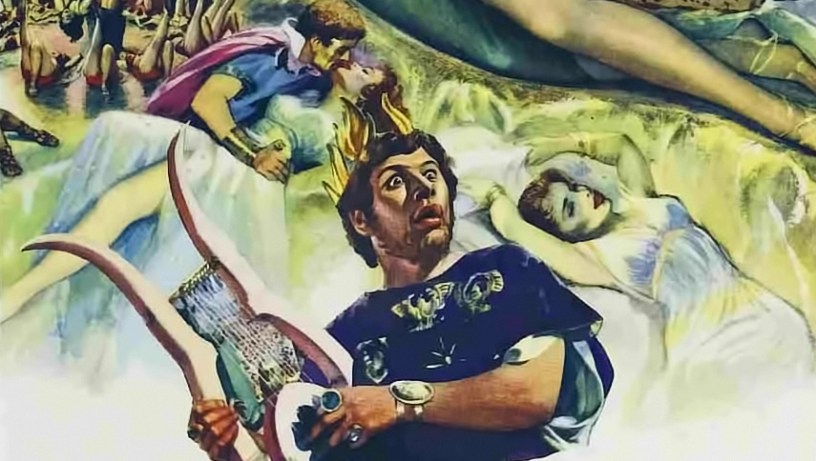
– Peter Ustinov’s Nero is one of cinema’s great villains, and one whose “genius” (to use his word) is immensely under-appreciated. As referenced in the podcast, Nero is all about the theatrics, composing while being pampered, “composing while he sings” at a party, and dramatically unveiling his plans for a new palatial complex, one that would replace much of Rome, leading to…
– The Great Fire of Rome (which also involves some imperial singing.)
– Christ speaks to St. Peter (Finlay Currie) on the road outside of Rome, saying through a child that he will be “crucified a second time” in Rome. Realizing what this means, Peter returns to the city to inspire the Christians about to be killed in the arena, ultimately leading to his own condemnation and crucifixion.

Kingdom of Heaven (2005) 
– The Crusades, which occurred over two centuries, can be difficult to follow. Here is a brief summary of all 9 Crusades, plus the “People’s” and “Children’s” Crusades.
– This article breaks down all the differences between the maligned theatrical cut and the 45-minutes-longer director’s cut.
– Harry Gregson-Williams’ incredible score is by far the best part of this movie. Here is all 3 hours of it.
– Godfrey (Liam Neeson) sardonically tells Balian (Orlando Bloom) and the Hospitaller (David Thewlis) that he once fought 2 days with an arrow through his testicle.
– Leprous King Baldwin’s face is finally revealed when Sibylla (Eva Green) mournfully looks on her dead brother’s corpse and removes his mask. The music playing over this scene is “Vide Cor Meum,” an aria composed by Patrick Cassidy for Ridley Scott’s earlier film Hannibal.
This speech by the Hospitaller destroys the aura of the film as it’s chock full of modern convictions about the dangers of zealous religious beliefs.
– After the Muslim army has taken Jerusalem, Saladin shows his respect for the Christians when he sees that a crucifix has been thrown to the floor. He respectfully picks it up and puts it back on a table, an act that had modern Middle Eastern filmgoers rising to their feet.
Game of Thrones‘ Iain Glen (Jorah Mormont) appears at the film’s end as Richard the Lionheart. Here, Balian repeats the line “You…continue until they speak something else” regarding the way to the Holy Land.

The Young Pope (2016-2017)
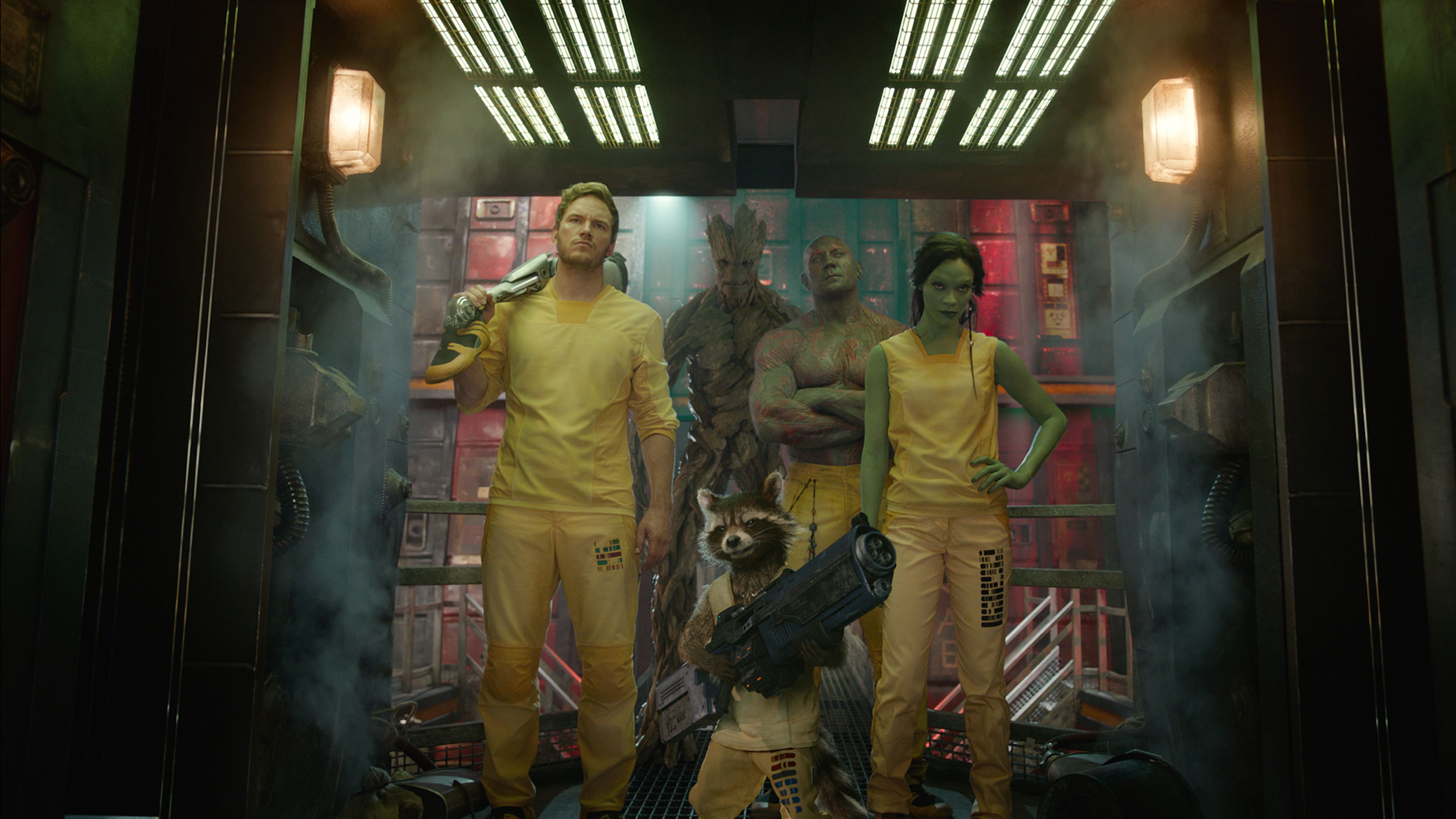
– We debated the nature of Lenny Belardo’s flawed-but-holy character, which can be perfectly summed up by this line from Guardians of the Galaxy. For the sake of time (because the entire show can basically be posted here), below are a few clips to get a taste of Pius XIII and the humor of this glorious, insane series:
All Along the Watchtower
Ketchikan, Alaska!
The Pope’s snack
The Pope as Banksy
The kangaroo
LMFAO
Pius XIII enters–nay, is carried into–the Sistine Chapel
The Pope vs. the Prime Minister
The Africa speech and Halo
The Popes offer some advice

Honorable Mentions
Ben-Hur: We liked, but didn’t love, Ben-Hur, the 1959 Best Picture winner that also won 10 other Oscars including a Best Actor award for Charlton Heston. The rowing scenes are cool (Steve rowed in high school) and its famed chariot race lives up to its reputation–with one major caveat: we’d seen it all before in 1999’s Star War Episode I: The Phantom Menace. (George Lucas blatantly ripped it off for his podrace sequence, but as 7-year-olds, did we really know any better?) And, oh, look, it’s Peter from Quo Vadis, here playing Balthazar, one of the three wise men.
The Passion of the Christ: Mel Gibson’s magnum opus is bloodier than any movie version of Christ’s crucifixion that’s come before it and will probably come after it. Whatever you want to say about Gibson’s personal life, The Passion of the Christ is a profound piece of cinema; Jim Caviezal’s performance is a godsend (pun intended) and the movie was a roaring success despite its ultra-violence. For at least a decade, it was the highest-grossing R-rated movie ever, making over $600 million at the box office. Lastly, more movies should have characters speaking Aramaic and Latin.
The Passion of Joan of Arc: Steve watched the 24fps version of Carl Th. Dreyer’s 1928 masterpiece, which has French subtitles and is accompanied by Richard Einhorn’s 1994 oratorio, “Visions of Light.” Chris, on the other hand, watched the slower 20fps Danish version, which is accompanied by a more low-key piano score by Mie Yanashita that better fits Dreyer’s vision of the movie. This review compares the two versions. (Incredible fact: the long-lost Danish version was discovered in the closet of an abandoned mental hospital in Oslo, Norway in 1981.)
Rome Open City: There aren’t too many clips on YouTube, but here is one of the 1945 film’s most famous scenes, in which a woman is gunned down by Nazi soldiers.
Spotlight: 2015’s Best Picture winner is still (unfortunately) relevant. Trailer here.
Doubt: John Patrick Shanley’s 2008 adaptation of his own play has fantastic performances from 3 Oscar winners and also Amy Adams, all of whom were nominated for Academy Awards. This includes Viola Davis, who only appeared in a single scene (and it’s flippin’ great). Steve reviewed Doubt way, way back when he first started this blog, which can be found here. (Please be kind, it was his first ever review.)

Podcast Mentions
– Chris mentioned the Taylor Marshall Show, a podcast by Dr. Taylor Marshall, a former Episcopalian priest who converted to Catholicism and has 8 children. Dr. Marshall has several informative YouTube videos on the current crisis in the Catholic Church, all definitely worth watching. [2025 edit: this didn’t exactly age well.]
– Steve mentioned the exponentially lower-brow SSEU Podcast, which initially started out as a podcast based on another podcast but has now morphed into a bunch of Twitter friends interviewing one another about movies, joking about stool samples, and reading poetry about gas station food. (Full disclosure: Steve appeared on Episode 8, The Cactus and the Giant, which also had some pretty good show notes.) Their last episode was a direct inspiration for this one. [2025 edit: this also didn’t exactly age well.]

Image credit:
Poster for Quo Vadis, 1951 / Public Domain via Wikimedia Commons.

Ruminations Episode III: Catholic Films Through the Ages

In honor of Lent, we are back to discuss three Catholic themed movies for our third episode. (Well, not all of them are movies, and not all of them are Catholic, but we explain what we mean by that in the podcast.) We tried to think outside the box on this one, focusing our discussion on three ages of Catholicism: antiquity, the Middle Ages, and modern times.

Below are show notes with a bunch of clips, and they’re all worth checking out. Seriously. We hope you enjoy!

Episode III Show Notes

Listen on iTunes

Listen on Spotify

Continue reading

Ruminations Episode I Show Notes

For ease of discussion, we each compiled an individual ranking from best to worst and then took the average of each film to create a single master list:

Rank Master Chris Steven
1 Aladdin (1992) Aladdin Aladdin
2 The Hunchback of Notre Dame (1996) The Hunchback of Notre Dame The Hunchback of Notre Dame
3 Beauty and the Beast (1991) The Lion King Beauty and the Beast
4 The Lion King (1994) Beauty and the Beast Pinocchio
5 Cinderella (1950) The Little Mermaid Alice in Wonderland
6 The Little Mermaid (1989) Sleeping Beauty The Lion King
7 Sleeping Beauty (1959) The Black Cauldron Cinderella
8 Pinocchio (1940) Cinderella Emperor’s New Groove
9 Hercules (1997) Hercules Hercules
10 Mulan (1998) Mulan Sleeping Beauty
11 Alice in Wonderland (1951) Tarzan The Little Mermaid
12 Tarzan (1999) The Princess and the Frog Mulan
13 The Black Cauldron (1985) Pocahontas Pocahontas
14 Pocahontas (1995) Pinocchio Tarzan
15 Emperor’s New Groove (2000) Robin Hood Snow White and the Seven Dwarfs
16 The Princess and the Frog (2009) Lilo and Stitch The Princess and the Frog
17 Robin Hood (1973) Dinosaur The Great Mouse Detective
18 Snow White and the Seven Dwarfs (1937) Emperor’s New Groove The Black Cauldron
19 Lilo and Stitch (2002) Alice in Wonderland Robin Hood
20 The Great Mouse Detective (1986) Snow White and the Seven Dwarfs Lilo and Stitch
21 Zootopia (2016) The Fox and the Hound Wreck It Ralph
22 Peter Pan (1953) Peter Pan Zootopia
23 The Fox and the Hound (1981) The Jungle Book Ralph Breaks the Internet
24 Wreck It Ralph (2012) Zootopia Bolt
25 Dinosaur (2000) 101 Dalmatians Tangled
26 Ralph Breaks the Internet (2018) Oliver and Company Peter Pan
27 Bolt (2008) The Great Mouse Detective The Fox and the Hound
28 101 Dalmatians (1961) Wreck It Ralph Fantasia
29 Tangled (2010) Ralph Breaks the Internet Dumbo
30 Dumbo (1941) Bolt Atlantis: The Lost Empire
31 Fantasia (1940) Dumbo Frozen
32 The Jungle Book (1967) Brother Bear 101 Dalmatians
33 Brother Bear (2003) The Rescuers Dinosaur
34 Frozen (2013) Fantasia Brother Bear
35 Oliver and Company (1988) Tangled Meet the Robinsons
36 The Rescuers (1977) Frozen The Rescuers
37 Atlantis: The Lost Empire (2001) Lady and the Tramp Fantasia 2000
38 Lady and the Tramp (1955) Fantasia 2000 Lady and the Tramp
39 Fantasia 2000 (1999) The Aristocats The Jungle Book
40 Meet the Robinsons (2007) Bambi The Aristocats
41 The Aristocats (1970) Meet the Robinsons Moana
42 Bambi (1942) Moana Oliver and Company
43 Moana (2016) Atlantis: The Lost Empire Bambi
44 Home on the Range (2004) The Sword in the Stone Big Hero Six
45 The Rescuers Down Under (1990) Home on the Range Home on the Range
46 Big Hero Six (2014) The Rescuers Down Under The Rescuers Down Under
47 Treasure Planet (2002) Treasure Planet Treasure Planet
48 The Sword in the Stone (1963) The Many Adventures of Winnie the Pooh The Adventures of Ichabod and Mr. Toad
49 The Adventures of Ichabod and Mr. Toad (1949) The Adventures of Ichabod and Mr. Toad The Many Adventures of Winnie the Pooh
50 The Many Adventures of Winnie the Pooh (1977) Big Hero Six Winnie the Pooh
51 Winnie the Pooh (2011) Winnie the Pooh The Sword in the Stone
52 The Three Caballeros (1944) The Three Caballeros The Three Caballeros
53 Saludos Amigos (1942) Saludos Amigos Saludos Amigos
54 Make Mine Music (1946) Melody Time Make Mine Music
55 Melody Time (1948) Make Mine Music Fun and Fancy Free
56 Fun and Fancy Free (1947) Fun and Fancy Free Melody Time
57 Chicken Little (2005) Chicken Little Chicken Little
    • SNOW WHITE AND THE SEVEN DWARFS: We mentioned the seven little Oscars Walt Disney received for Snow White and the Seven Dwarfs. Here he is presented the awards by Shirley Temple.
    • THE SWORD IN THE STONE: Madam Mim toys with young Arthur and scares him by pulling her face and turning it into a pig, which Disney pays homage to in Princess and the Frog when the alligator Louis puts willow tree leaves over his face.
    • WINNIE THE POOH: The best scene in either “Pooh” movie (pun intended) is when Winnie trips out on bad honey in the Heffalumps and Woozles sequence. This scene also hearkens back to when Dumbo accidentally gets drunk and hallucinates “Pink Elephants on parade.” The Baksun song, from the 2011 film Winnie the Pooh, is arguably the only memorable piece of it–in fact, it was the only scene we could remember!
    • THE ADVENTURES OF ICHABOD AND MR. TOAD: Check out this video of the Disneyland dark ride “Mr. Toad’s Wild Ride,” where you, your family, and Mr. Toad get to be damned to Hell with a smile! Quite possibly the best scene from any of the World War II era films is the famous Headless Horseman chase which ends in a flaming pumpkin being thrown at a terrified Ichabod Crane.
    • WWII ERA FILMS: Here’s some backstory on the Good Neighbor Policy mentioned when discussing Saludos Amigos and The Three Caballeros from NPR. For more information, you can always check good ol’ reliable Wikipedia. Here is the beloved Gran Fiesta Tour starring the Three Caballeros at the Mexican Pavilion in EPCOT, enjoyed best over a margarita from La Cava del Tequila. In Make Mine Music, a whale sings opera. (It’s exactly how it sounds.) The Fun and Fancy Free intro includes Jiminy Cricket, bringing the movie some sense of continuity…but that’s about it.
    • CHICKEN LITTLE: Chicken Little SUCKS, end of story! (If you want tangible evidence, brace yourself and check out the alien chase scene from the 2005 abomination).
    • MULAN: Here is some backstory on the legend of Mulan. Some highlights: Mulan embarrasses her family and herself with the matchmaker and she goes to the shrine of her ancestors and sings “Reflections.” She then meets Mushu, who tries to overcompensate for his small stature. In this last clip, the hulking mass Shan Yu and the Hun army fight Captain Shang and Mulan.
    • HERCULES: Phil the satyr–who is a mirror image of his voice actor Danny DeVito–sings “One Last Hope” while training Hercules. The fast-talking Hades erupts in anger at henchmen Pain and Panic wearing Hercules’ merchandise. Later, in one of the most quotable scenes in the movie, Pain and Panic, in the guise of two children, trick Hercules and get him to fight the Hydra by pretending to be trapped under a boulder.
    • PINOCCHIO: We mentioned Pinocchio‘s diverse and terrifying villains. Here the overweight Italian caricature Stromboli threatens to use Pinocchio as firewood and babbles in 40s’ era Disney dialect “Italian.” In one of Disney’s scariest moments, the evil Coachman’s face contorts into a demonic visage while declaring his diabolic plans for the boys he’s kidnapping. The oily Lampwick transforms into a donkey in traumatizing fashion before Pinocchio’s eyes on Pleasure Island. The film’s final villain, the giant whale Monstro, sneezes out and chases Geppetto and Pinocchio.
    • SLEEPING BEAUTY: Maleficent, the self-declared “mistress of all evil,” transforms herself into a dragon, fights Prince Philip, and becomes Disney’s villain poster child all in one fell swoop. Prince Philip places the film in the 14th century when talking to his father. We also mentioned that Disney used music from Pyotr Ilyich Tchaikovsky’s 1890 ballet Sleeping Beauty as the basis for its film’s music, and here is a blog post by Floyd Norman, one of the film’s animators, on that subject.
    • CINDERELLA: A particularly cute scene in Cinderella is when the mice introduce Gus Gus to Cinderella. Disney’s most evil housecat Lucifer maniacally sits on Lady Tremaine’s lap as she snaps at Cinderella. He later chases and tries to eat Jaq and Gus who are acquiring pieces to make Cinderella’s dress. We erroneously called the Duke a viceroy or captain; here, he discovers Cinderella and finally finds the owner of the lost glass slipper.
    • THE LITTLE MERMAID: Ursula sings “Poor Unfortunate Souls” and makes a deal where Ariel signs over her voice to the sea witch. She then, in true Disney fashion, transforms herself into a giant octopus and is then impaled by Prince Eric. We mentioned the controversy surrounding Ariel’s plot line–a quick Google search brings almost 2 million results–so have at it, if you are so inclined. We’ll end with a short tweet from conservative columnist John Podhoretz about The Little Mermaid‘s impact.
    • THE LION KING: First, that opening. We (well, Steve) mentioned how Black Panther is essentially a live-action Lion King (which is funny as Disney is currently making an all-CGI “live-action” version to be released later this year). Scar prepares his Nazi-like hyenas for his usurpation of the kingdom which culminates in him revealing his true intentions as he whispers “long live the king” when killing Mufasa. In the film’s lightest moment, Simba grows up to song (becoming Matthew Broderick) in the famous “Hakuna Matata.” Later, the heavenly ghost of Mufasa appears to Simba in the sky reminding him who he truly is–the music is chill-inducing.
    • BEAUTY AND THE BEAST: The Beast erupts in anger at Belle and gives her some warm advice that she should “Go ahead and STARVE,” a favorite scene of Chris’s from his childhood. The dinnerware come together to console a crying Belle by singing “Be Our Guest.” (Remember, it all takes place on the table!) After a few drinks, the towns people sing a raucous song about their local hero Gaston. We also mentioned the innovative use of computers in the artwork for the Best Picture-nominated film, so here is a behind-the-scenes look at the making of the movie.
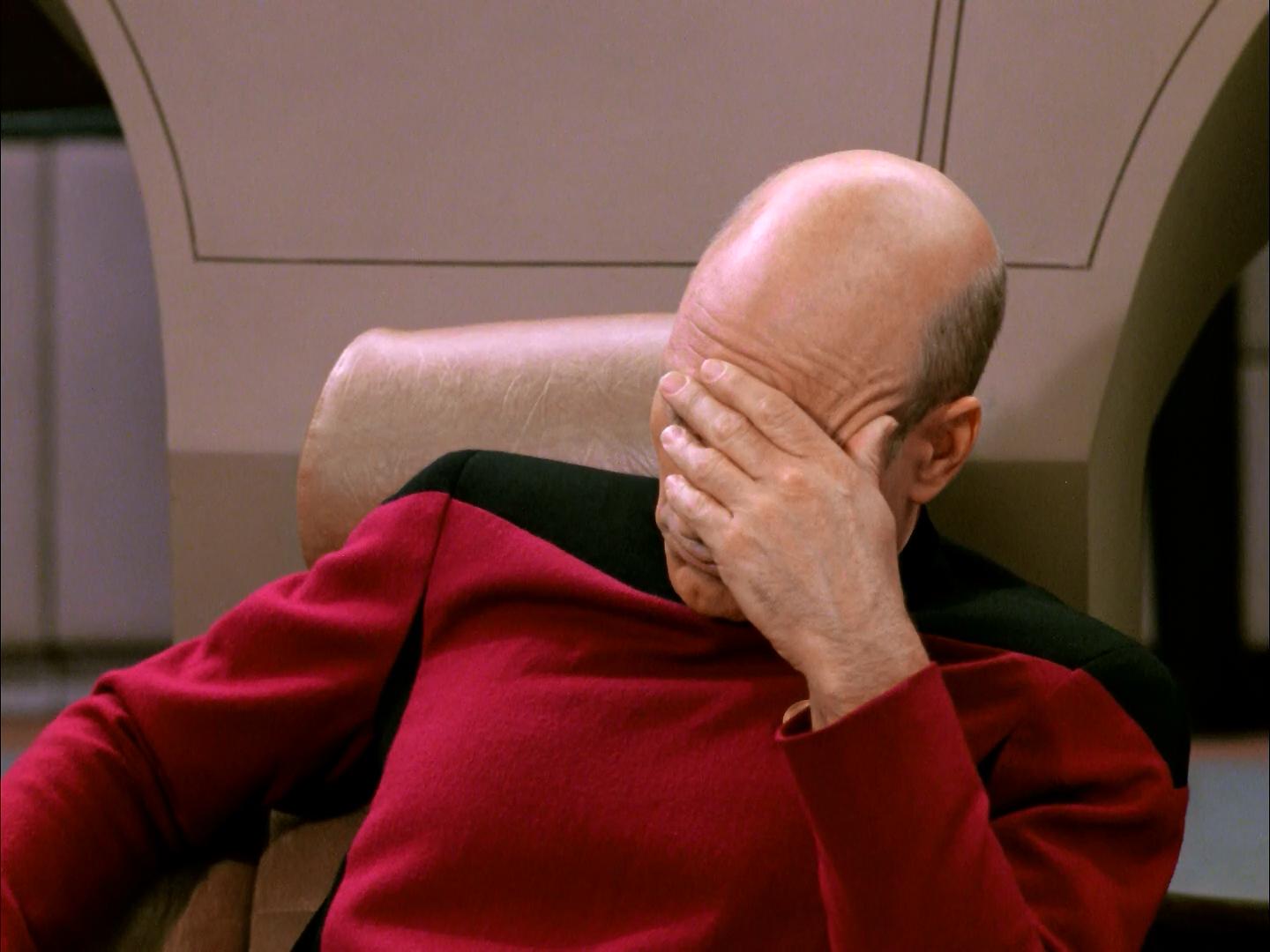
    • THE HUNCHBACK OF NOTRE DAME: Hunchback begins with its goosebump-inducing opening number, “The Bells of Notre Dame” (which also serves as the ending to our episode.) Quasimodo watches the city streets of Paris by moonlight as he sings the heartfelt number “Heaven’s Light.” This quickly leads to the diabolical musical number of “Hellfire,” sung by Judge Frollo in front of a raging fireplace as he lusts after Esmeralda. (This would also be a good time to mention that Chris was incorrect–and face palmed hard–about Maleficent being the only Disney villain to ever say hell, as Frollo sings an entire song about it!) Lastly, Hugo the gargoyle, voiced by Jason Alexander (much to Steve’s chagrin), sings “A Guy Like You” to make Quasimodo feel better.
    • ALADDIN: Aladdin shows Jasmine “A Whole New World” in one of Disney’s most romantic scenes. The film’s superb villain Jafar reaches his serpentine zenith as he transforms into a giant cobra, Chris’s favorite scene in any Disney movie. During the fight scene, Genie turns into a cheerleader, not-so-secretly rooting for Aladdin. All of Robin Williams’ impressions and their inspirations in Aladdin can be found in this video. Also included here are two articles about the dispute between Robin Williams and Disney that Steve sort of mentioned but failed to expand upon–we had no idea a Picasso painting was involved until compiling these notes. Lastly, Chris compares his loyalty to Aladdin to that of Davy Jones’ loyalty to Calypso in Pirates of the Caribbean: At Worlds End.
    • THE BLACK CAULDRON: We have linked a decent Slate article on the making and box office failure of The Black Cauldron. (The only caveat is that Chris strongly disagrees with the author about the Horned King being a poor villain, because you know, he’s great!) Here is the Horned King’s first appearance, where he reveals he wants to resurrect his dead soldiers as “cauldron born” and ultimately desires to be worshipped as a god among men (See? So cool!) He later terrorizes his minions as he makes his dramatic entrance into the banquet hall of his castle. The only other Disney villain that could arguably be labeled as equal to the Horned King’s sheer evilness is the demon Chernabog from Fantasia, who summons the forces of darkness in the epic scene “A Night on Bald Mountain.”
    • ALICE IN WONDERLAND: Alice stumbles upon a Caterpillar smoking a hookah, who impatiently asks her who she is. She is later greeted by the delightfully mad Cheshire Cat who gives her dodgy advice.
    • THE EMPEROR’S NEW GROOVE: There is a documentary titled The Sweatbox that covers the history of the scrapped, much darker version of The Emperor’s New Groove called Kingdom of the Sun, but Disney seems to not want it available to the public. A version on YouTube that we had saved for these notes has already been removed for copyright reasons.
    • THE PRINCESS AND THE FROG: The “Disney Renaissance” Era-esque The Princess and the Frog opens and closes with the great musical number “Down in New Orleans.” Dr. Facilier also takes up the mantle of great villain songs when he tricks Prince Naveen into making a deal with him and his “Friends on the Other Side.”
    • ZOOTOPIA: Judy Hopps plays “Try Everything” by pop star Gazelle (aka Shakira) as she travels to Zootopia for the first time, similar to how we both have played this incredibly catchy song many times since first hearing it. After she becomes a cop, she is put in charge of parking meters and has a particularly rough day giving out tickets on the city streets of Zootopia–a truly laugh-out-loud moment.
    • Two final notes from Steve: first, he would like to link to the show notes of an episode of the great culture podcast The Weekly Substandard from March 2017, as his email on the WWII era Disney films was featured (and also read in the episode.) Last but not least, here is the first ever blog post “Flipp” wrote on this site, way back in the summer of 2014–a post that never got a follow-up for a variety of reasons. Guess what it was about?

Image credit:
Fireworks show over Cinderella Castle at closing hour / Disney World, Orlando 2010 / © Jorge Royan / http://www.royan.com.ar / CC BY-SA 3.0 via Wikimedia Commons.

Ruminations Episode I: The Best and Worst of Disney

Welcome to the debut episode of Ruminations, a podcast on movies, politics, and religion, discussed over a glass—or three—of some type of adult beverage. In this inaugural episode, co-hosts Chris and Steve discuss the 57 animated films produced by Walt Disney Animation Studios. This conversation has been five years in the making, as it was the summer of 2014 when Chris and Steve began a chronological journey through Disney’s official filmography, starting with 1937’s Snow White and the Seven Dwarfs. This endeavor finally came to its conclusion last year (December 2018, to be exact) with the release of Disney’s most recent movie, Ralph Breaks the Internet.

For ease of discussion, each co-host compiled an individual ranking from best to worst; a combined average was then taken to create a single master list. The master list’s Bottom 10 and Top 10 will be highlighted specifically in this episode. For the complete ranking, additional notes, and movie clips, follow the show notes link below. For now, please listen and enjoy!

Episode I Show Notes

Listen on iTunes

Listen on Spotify

Continue reading

25 years/25 films

Around 1 in the morning the other night on Twitter, I came across this article in which a few of the AV Club film critics compiled lists of their favorite movie of the year for each year since they were born. Instead of going to bed like a normal person on a work night, I proceeded to sacrifice much-needed sleep for what one could say was a masochistic, utterly pointless cause: I had to make my own list, right then and there.

Why, you might ask?

Because there are few things in life better than making movie lists and ranking movies, especially in new and creative ways.

It’s just science. 

fbd

My list of my 25 films for 25 years on this earth:

1992 – Aladdin
1993 – Jurassic Park
1994 – Pulp Fiction
1995 – The Usual Suspects
1996 – The Hunchback of Notre Dame
1997 – Austin Powers: International Man of Mystery
1998 – The Big Lebowski
1999 – The Mummy
2000 – Gladiator
2001 – The Lord of the Rings: The Fellowship of the Ring
2002 – The Lord of the Rings: The Two Towers
2003 – The Lord of the Rings: The Return of the King
2004 – Harry Potter and the Prisoner of Azkaban
2005 – Star Wars Episode III: Revenge of the Sith
2006 – Casino Royale
2007 – Sunshine
2008 – Gran Torino
2009 – Inglourious Basterds
2010 – Harry Potter and the Deathly Hallows – Part I
2011 – Drive
2012 – Les Miserables
2013 – The Wolf of Wall Street
2014 – Edge of Tomorrow
2015 – The Martian
2016 – Rogue One: A Star Wars Story

What does this list say about me? Generally, it says I like The Lord of the Rings and Star Wars, sci-fi epics and black comedies, and movies with great music, especially French-themed musicals. It also made me realize that I like more movies from before I was born than came out during my lifetime. This is especially true when considering my favorite movies from the last decade or so; these years simply pale in comparison to years that came before, and it was a struggle to think of a film that was truly a favorite of mine after the year 2009.

The first decade and a half of my life did have some intense competition though, so I wanted to also include 5 honorable mentions of movies that are nearer and dearer to my heart than many of the others on the list that just missed out. And let me say, 1999 was a squeaker:

Office Space (1999)
The Matrix (1999)
Master and Commander: The Far Side of the World (2003)
The Departed (2006)
Atonement (2007)

What does your list look like?

-Flipp

Featured image: Ba’Gamnan, CC BY-SA 2.5 via Wikimedia Commons.

Eh.

I’ve refrained from writing this post for months, unsure of what exactly to say and afraid of the backlash. However, with the release of its Blu Ray and DVD, I finally want to publicly say, completely forward and without nuance…

I did not like Star Wars: The Force Awakens

george bush shoe

Now, I didn’t hate Star Wars: The Force Awakens. I will gladly admit that I was brought to tears of utter joy by its initial trailers (that music!) and was fairly entertained by many parts of the movie, especially the scenes involving Han Solo. However, I wasn’t swayed emotionally one way or another by the movie as a whole. My one word response to the film as that final compressed, spinning aerial shot of Rey meeting Old Luke in Ireland circle-wiped to “Directed by J.J. Abrams” was…

“Eh.”

But then I let the dust settle. I watched the film again, a few days later, and while I enjoyed myself slightly more, I also hated the parts I disliked the first time upon seeing them again. If anything, my opinion got a little worse. This, combined with the outrageous level of hype and love shown for the movie by practically everyone has made me want to go all Kylo Ren on my computer. I’m all for being excited by a new movie, especially a new Star Wars movie. But once that movie is viewed by millions of people, I would hope and expect legitimate criticism, not blind loyalty and exclamations that because it is Star Wars and  because it wasn’t made by George Lucas, therefore it has to be the GREATEST  STAR WARS MOVIE SINCE EMPIRE STRIKES BACK. (The same crazed, irrational fervor surrounded the most recent Jurassic Park film, which was awful.)

I find that statement (about Force Awakens being the best since Empire) extremely wrong because it begs the question that Return of the Jedi isn’t good. I have also come to like Episodes II and III, and to me, both of these prequel films are worth more than The Force Awakens ever could be. Oops. Did I say that out loud?

george bush shoe

The Good.

  • Han Solo. Harrison Ford was great. His old Han was so much better than his old Indy. This was incredibly surprising because it’s basically a fact that he likes Indiana Jones so much more than Star Wars (hello, Indy 5!!) His interactions with Chewie and Rey were hilarious and sweet, and he got his wish that Han would be killed off, albeit 32 years later…
  • BB-8 because he was cute and reminded me of my cat.
  • Finn’s fight with that Stormtrooper (named by the Internet TR-8R), and the Resistance’s surprise attack on the First Order. That was an exhilarating scene, and that is probably the highest praise I have for anything involving the production of the movie.
  • Rey’s vision when she picks up Luke’s lightsaber because it reminded me of Star Wars: Knights of the Old Republic
  • …and when she uses the Force to get his lightsaber in her fight with Kylo Ren. (Again, just like in the trailers, it’s John Williams’ use of an OLDER theme that sells it for me.)
  • That final compressed, spinning aerial shot of Rey meeting Old Luke in Ireland that circle-wiped to “Directed by J.J. Abrams.” And I actually liked that Luke was in it for less than 30 seconds and remained speechless. It (and this is the only thing, really) made me want to see Episode VIII.

The Bad.

First and foremost, The Force Awakens was not written well. In fact, I’d say it was written fairly poorly. For all the hype surrounding the knowledge that the writer of Empire and Jedi (and Raiders of the Lost Ark) was returning after three straight George Lucas-penned screenplays, Lawrence Kasden failed to impress me. In fact, some of the dialogue was so wooden and flat at times that I actually missed the nostalgia of the Prequels and their clunkers. The plot of Force Awakens was a reboot/remake of A New Hope with some Empire beats thrown in for good measure. The Snoke scenes should have been mysterious and engrossing but instead seemed like transplanted Thanos scenes from the various Marvel movies; they just didn’t feel like Star Wars to me. And the rules of Star Wars were seemingly thrown out the window… How did Rey manage to use a Jedi mind trick if no one ever taught her what it was, and after the film made it clear that she didn’t even know Jedi were real? Usually, McGuffins are simple and subtle enough where their existence in the story isn’t brought into question… Except the plot device that drives The Force Awakens made no sense. Why was there a map to find Luke? He’s not an object. He’s a person. Who leaves a map when they don’t want to be found? And how could no one figure out from either piece of the map (in BB-8 and in R2-D2) where it led? Most the the plot points in this movie just seemed like sloppy, lazy writing.

The movie itself started out on a terrible footing. The opening scene was filled with as much exposition-heavy dialogue as anything in Phantom Menace, and was awkwardly staged and awkwardly filmed. The dialogue never got better after that, with constant references to the Resistance and First Order throughout, but without any clarification or history to give the audience a clue as to what was going on. Expositionary dialogue is a necessary evil, especially in a sci-fi world, but it is at its best in small doses. When it consumes a film and also confuses more than it than explains, the movie suffers greatly. I still have no idea what was going on; the only clarity in the film was that we’d all seen the plot and characters and beats before… in the Original Trilogy. Disney played it safe (you could argue killing Han wasn’t safe, but as it was long overdue and foreshadowed heavily, it was also the easiest shock they could go for while not doing anything too controversial), and as they pleased the most Star Wars fans because they went in the opposite direction of the Prequels, they largely succeeded. Two billion dollars is worth a lot more than my petty criticism.

The Ugly.

But the worst two aspects of The Force Awakens weren’t deus ex machina Force tricks or the random CGI bartender who could have easily been a person in a mask or the lack of a noticable original score… it was the characters of General Hux and Kylo Ren. Both villains were clearly based on Grand Moff Tarkin and Darth Vader, but lacking their gravitas or imperious nature, they were laughably bad. It was as if J. J. Abrams REALLY wanted to impress Star Wars fans so he cast the two nerdiest, unassuming fans who came up to him at whatever convention he was attending to play the two villain roles, and then felt bad about his choice after seeing their acting but convinced himself that no one would ever notice because STAR WARS IS SO COOL.

Anyway, Hayden Christensen has been called wooden…out of his league… a terrible actor (among many, many worse things), but Kylo’s temper tantrums and moody attitude made Christensen look like Laurence Olivier. I know for a fact that statement will anger some people, but not once during Awakens did Kylo Ren make me feel anything at all other than annoyance. Even when he killed Han, it was broadcast a mile away because no one in Hollywood knows anything about subtlety, and I was more peeved at the story-telling than at the death of my favorite Original Trilogy character. And then he lost in a fight to a Stormtrooper-dropout who spent the entire movie getting beat up and a girl with no Force training (who obviously has a major connection to the Force, duh, I know!!! but still. Sloppy writing: it happened because the plot needed it to happen). Like I said, laughable.

And then there’s Hux. I don’t know who gave the okay to have the main military leader SCREAM to his troops with the most cliched, unoriginal dialogue imaginable, but I bet they  thought they were doing something really friggin’ clever. I hate comparing things to Hitler, but I bet they figured their military general would give off a Hitler vibe if he yelled with the burning hatred of a thousand suns at his troops.

Except they cast a Weasley, so he gave off a Weasley-trying-to-be-Hitler vibe, and it was one of the worst acting performances I’ve seen in a mainstream movie in ages. (To get political for a moment, Hux is the Hitler that everyone thinks Trump is/will be.) Give me Hayden yelling about slaughtering Sand People like animals any day. Where is Dexter Jettster’s buttcrack when you need childish, idiotic filmmaking? Oh, right… It was in a better movie.

george bush shoe

I am excited for Episode VIII. I want to know what happens next in the Star Wars universe. I want to see Rey’s journey. I want to see more of BB-8. I want to see Luke speak and be an Obi-Wan Kenobi to our new Jedi hero.

And I want to see LANDO. Please, Disney. At least bring him back in the next go round. He can even drink some Colt 45 on set. It’s gonna be great!

For everyone who loved The Force Awakens, I seriously am happy for you. And slightly envious that I can’t, so enjoy your Blu Ray and deleted scenes for me.

-FLIPP


2015 Oscars: Best Picture Nominees!

The 8 movies nominated for this year’s Best Picture Oscar make up a curious group of films. They’ve showcased extraordinary feats of cinematography, editing, acting, and perseverance. A few character actors finally got their time to shine, and a few historical figures in science, war, and civil rights were finally given proper representation on the big screen. Some of the films have elicited absurd amounts of controversy, whereas others have received absurd amounts of praise. My opinion on a few of these films is quite high. On others, I am mostly indifferent. One, I outright dislike, and it is certainly NOT one of the best films this century, Mr. A.O. Scott, thank you very much!

Without further adieu, my take on this year’s Best Picture nominees:

81. Boyhood

Boyhood
Okay. I respect the dedication put into this movie. I happen to really like all but one of the other Richard Linlater movies that I’ve seen (that is, the 3 Before movies, School of Rock, and Bernie; I hated A Scanner Darkly), and I went into Boyhood with extremely high expectations. But 2 hours and 45 minues of nothing was NOT worth my full price ticket at a New York City theater, and watching it a second time completely killed any positive inklings I may have had toward the movie from that first viewing. By the end of the film, I absolutely HATE the brooding, moody, confused hipster that main character Mason has become. And since his poor childhood is the product of all the people around him, I hate them all, too. When you look past the gimmick that was shooting the same movie over a 12 year span, you realize that the film’s writing is not too great, and the acting is actually kind of dull; Patricia Arquette will win Best Supporting Actress for her role as Mason’s mother, but it is more of a consolation prize in my opinion for showing up for the same gig for 12 years in a row than for any sort of profound acting chops on her part. As someone has said, if Boyhood had been shot in one year instead of 12, no one would give a flying bleep about the film, especially due to its lack of story and its crappy, unlikeable characters. And yet it’ll probably win Best Picture. This coming after the fact that Linklater’s immensely-better Before Midnight wasnt even nominated for Best Picture last year just proves that there is no justice in the world for a film curmudgeon like me.

12. American Sniper

American Sniper
I already wrote plenty on Sniper (see previous post), but I still don’t see a reason for all of the controversy, let alone all the hype. While the movie was definitely emotional and worth seeing once, Bradley Cooper’s bulked-up physique was honestly the most impressive part of the film. I guess one positive about the movie was that the entire time, I kept thinking, “How the hell did 84-year-old, senile, grumpy Clint Eastwood direct something so intense and big?” The fact that the finished product hit all the right emotional chords can be attributed to the skills of Eastwood as a director.
133. The Theory of Everything

The Theory of Everything
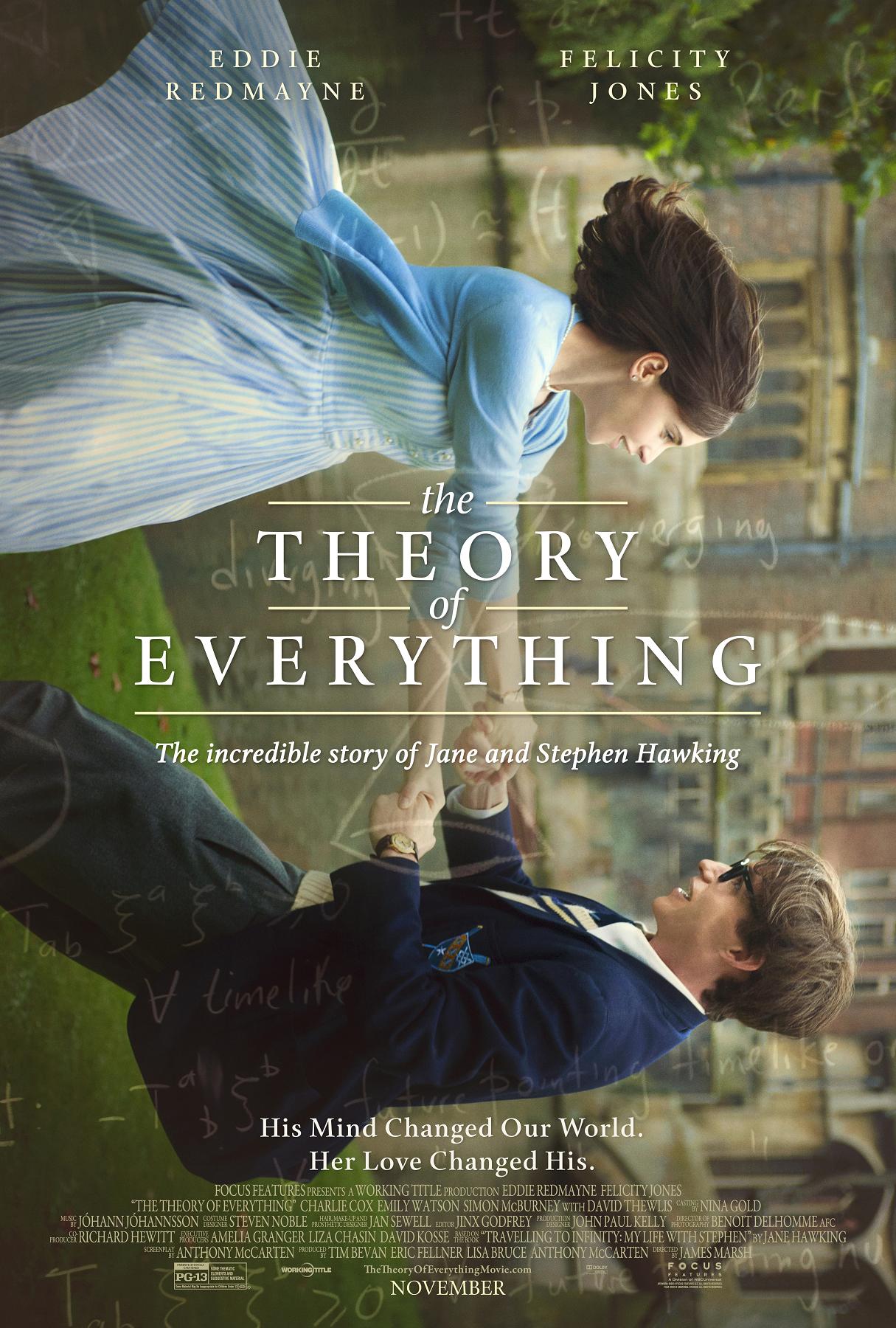
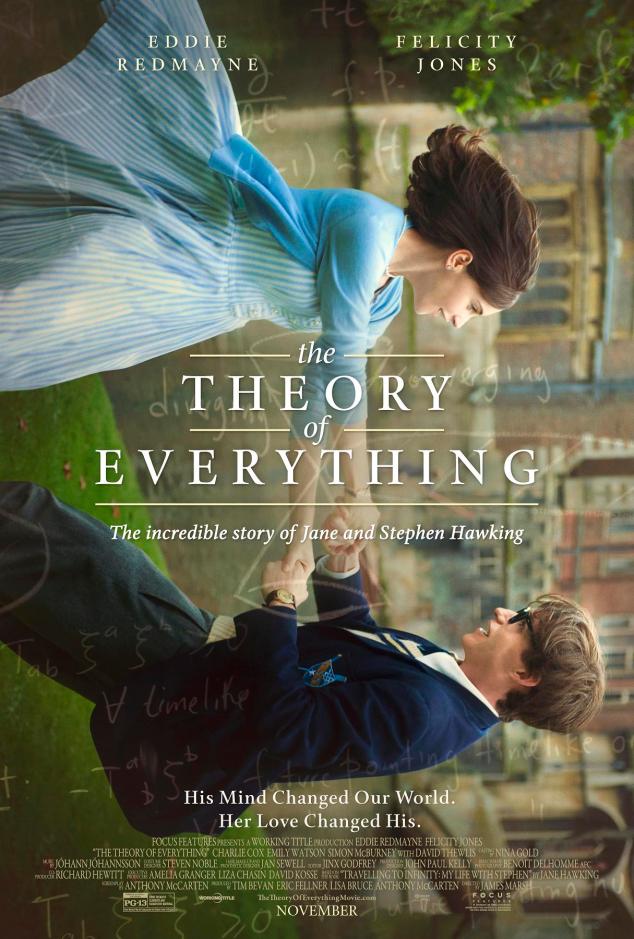
Eddie Redmayne was Oscar-worthy as British ASL-stricken scientist Stephen Hawking, though the movie itself wasn’t anything that special. It told a decent, if certainly unconventional love story, and featured some beautiful music, but it still didn’t do that much for me. It was worth seeing once, but Best Picture worthy? Not having it.
6. The Imitation Game

The Imitation Game:
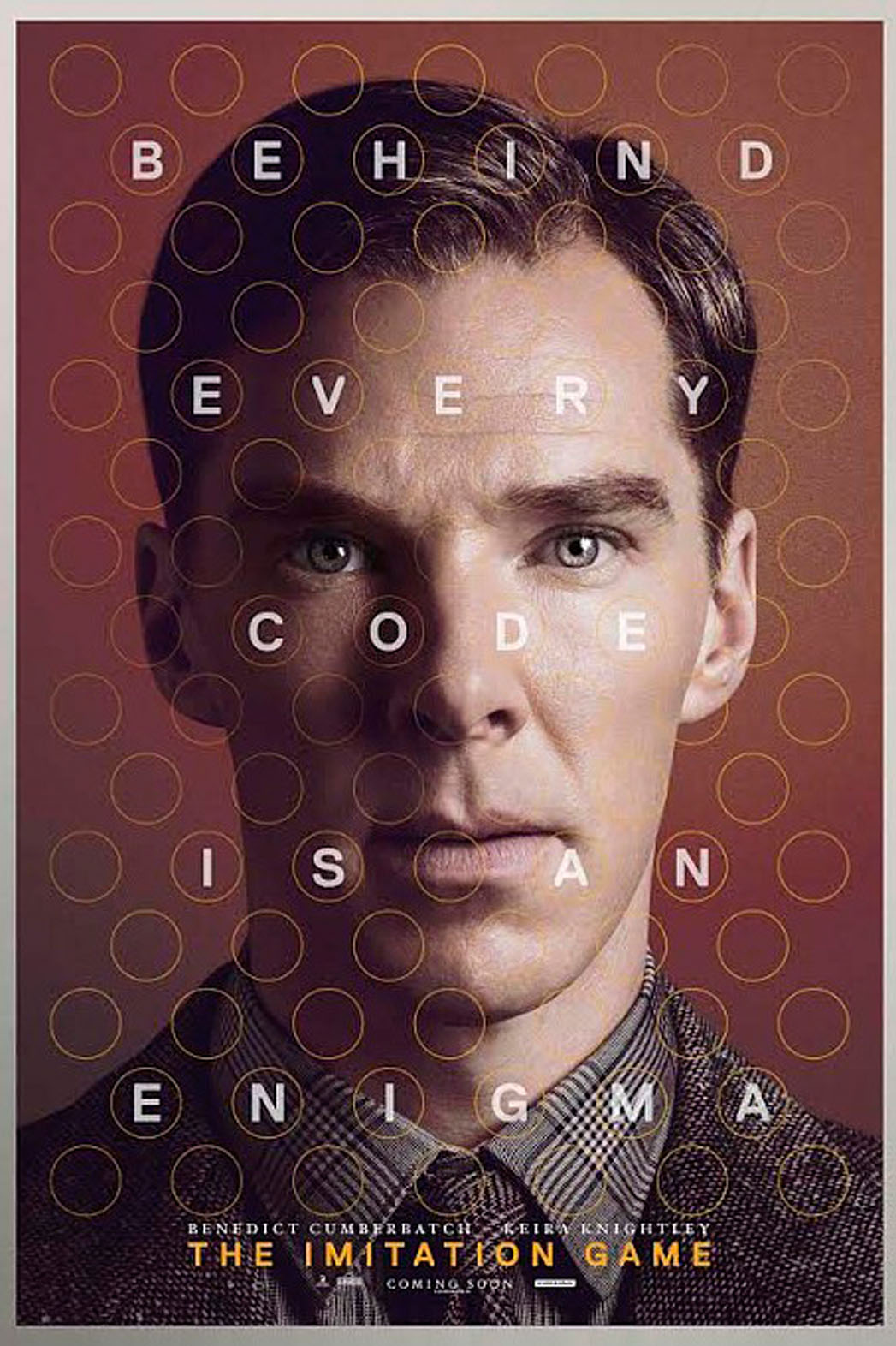
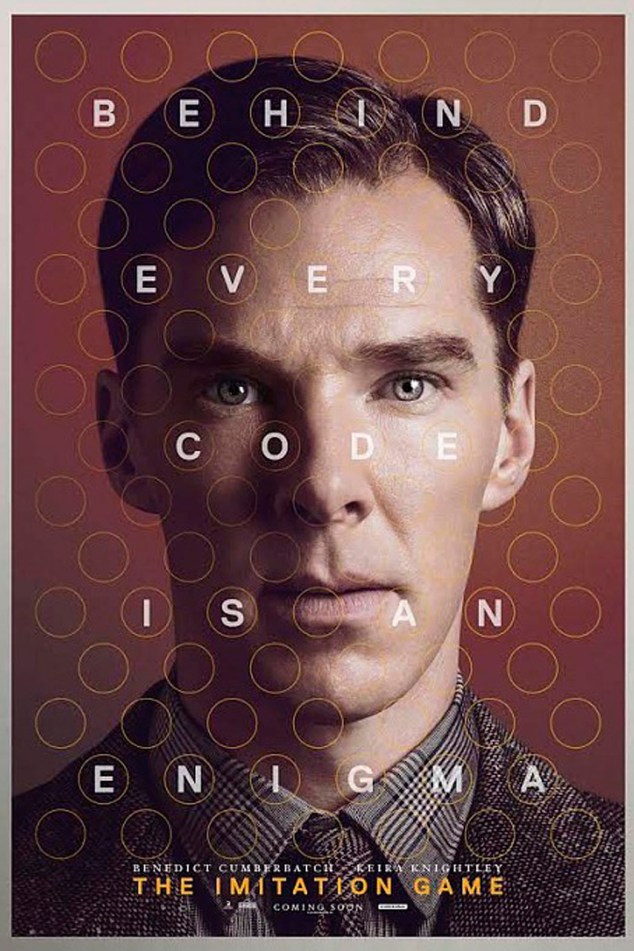
I really enjoyed The Imitation Game the first time I saw it. I loved the British World War II setting, the Desplat score, and the way the story was edited together, with its three timelines and its use of WWII-era newsreels and stock footage. However, the second time I watched it, I wanted to go to sleep. While still in no way a bad movie, it just didn’t seem like anything special upon a second viewing. I love Cumberbatch in almost everything he’s done, but I wasn’t THAT impressed by him as Turing, and Charles Dance literally walked off the set of Game of Thrones, took off his armor and removed the crossbow bolts from his chest, and put on a British Naval uniform. How can that be a bad thing, you ask? It shouldn’t have been, but Lord Tywin popping up in the middle of a World War II biopic just seemed out of place to me. Also, upon second viewing, the ending, while sad and emotional, seemed like it was a little too on the nost in its political messaging. The on-screen text that makes up the film’s epilogue focused more on Turing’s sexuality than his impact on WWII, codebreaking, and computers. While not wrong in any way, this text attempted to make a film that tackled so many broad historical and social topics to be a lot more streamlined and political than it actually was.
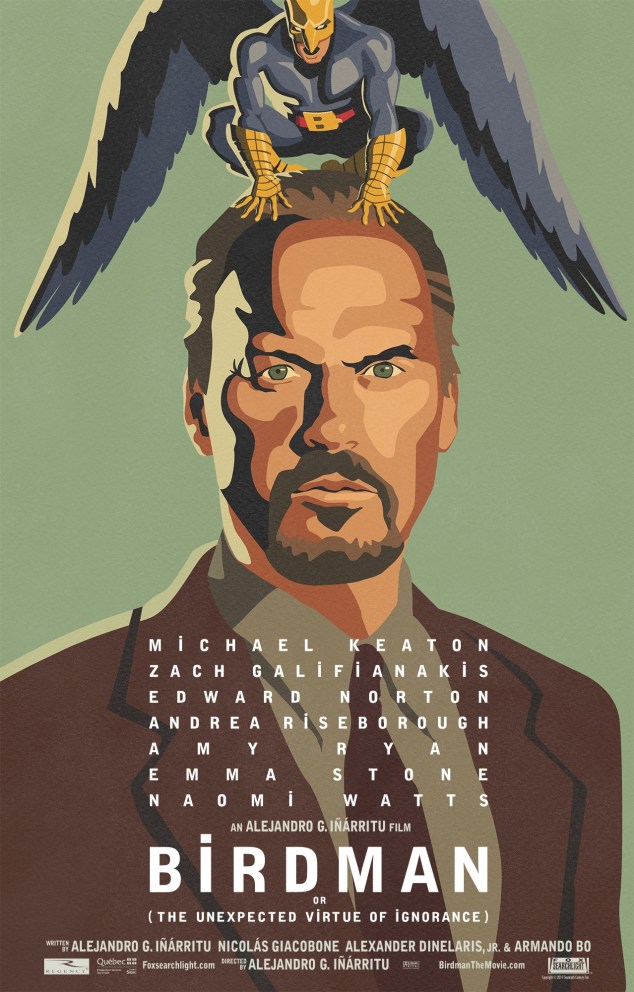
127. Birdman

Birdman or (The Unexpected Virtue of Ignorance)
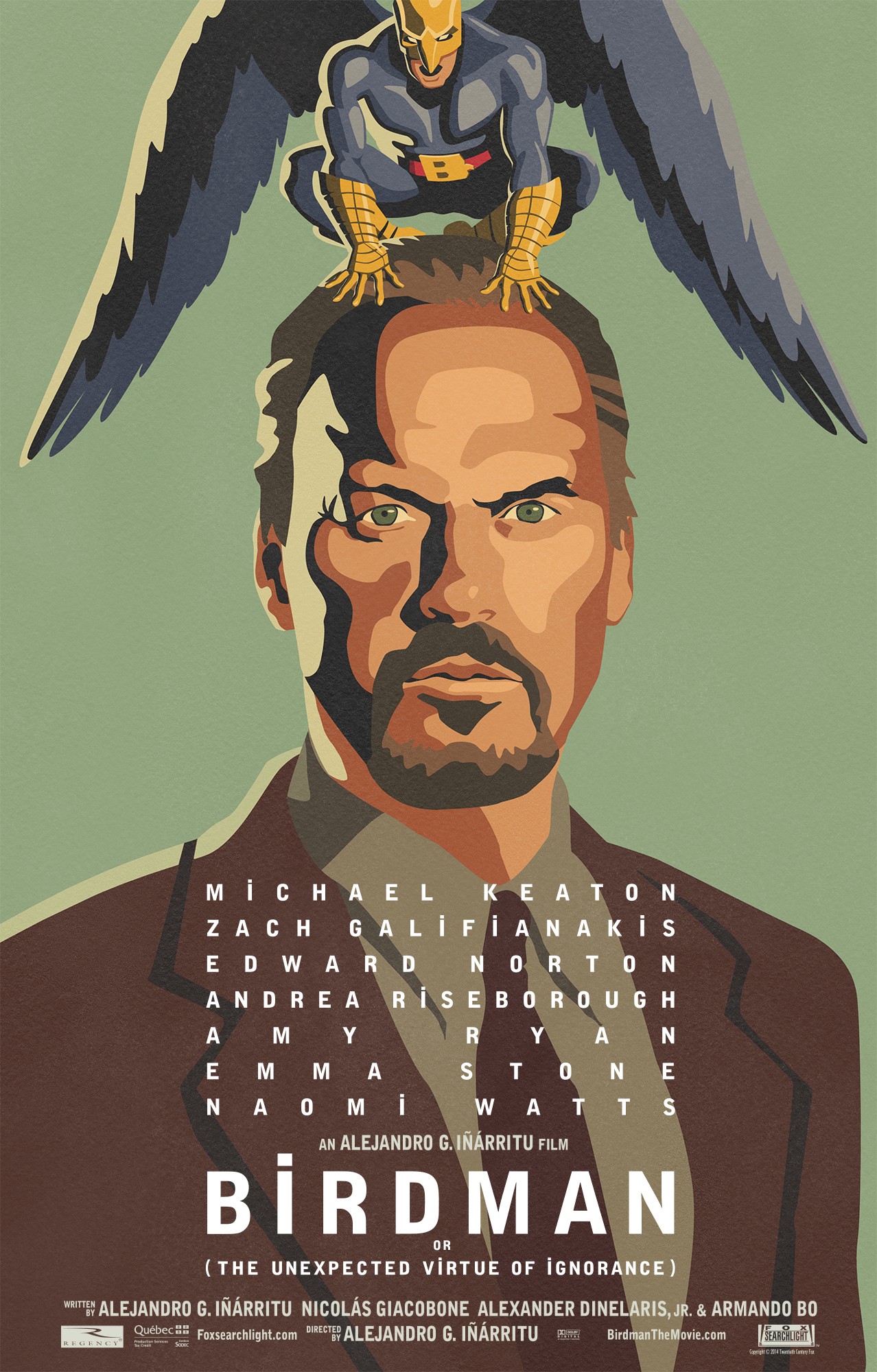
I very much enjoyed Birdman the first time I saw it, though, like with Boyhood and The Imitation Game, my enthusiasm for it lessened quite a bit after seeing it again. The amazing feat of Emmanuel Lubezki to make the film appear to be one long take wore a bit thin the second time through. The use of long takes of course made the superb acting stand out even more, as Keaton and Norton and Stone had to memorize large amounts of lines and blocking at a time, though, again, if the movie were filmed conventionally, would its dialogue and plot hold up? Probably not. Michael Keaton deserves the Oscar for his performance, but the rest of the film is a bit too eclectic and schizofrenic for me to outright love it. The drum score drove me a bit insane (as was the point, I think), and the ending really didn’t make any sense at all, no matter how you looked at it. Unquestionably, my favorite part of such a stylized and wonky film was the fleeting moment (probably a mistake that couldn’t be covered up due to the use of long takes) when Zack Galifianakis forgot what movie he was a part of for a split second and reverted into his Hangover schtick by calling Martin Scorsese “Martin Scorseez.” Simply amazing.
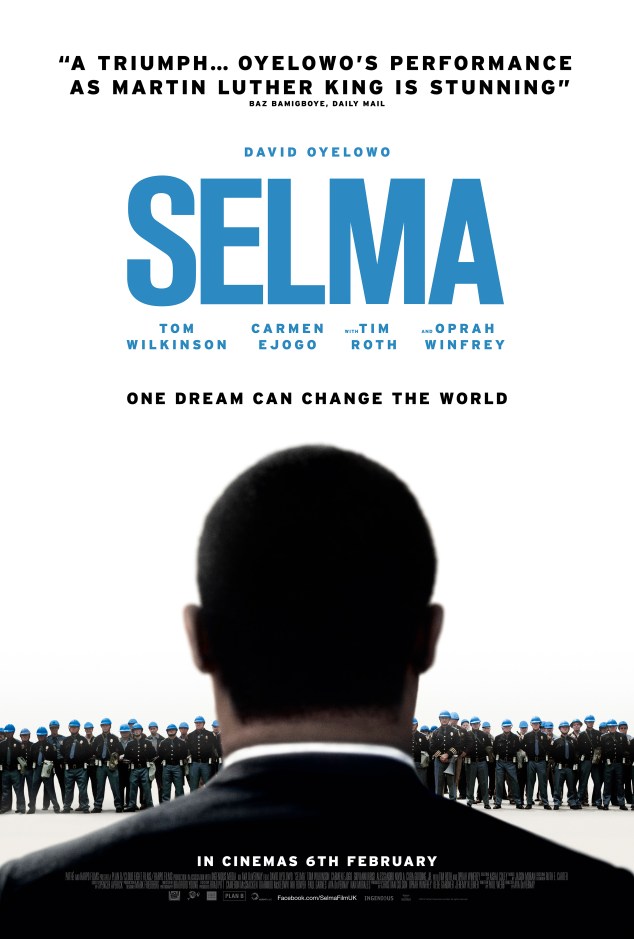
8. Selma

Selma
I didn’t expect to like Selma and I wound up loving it. Again, I probably wouldn’t watch it again, but it was worth seeing once and actually left an emotional impact on me, unlike a few of the movies I’ve already mentioned. David Oyelowo was fantastic as Dr. King, and his speech at the end was one of the more inspirational scenes in a movie this past year. I’m extremely happy that the movie remained apolitical for almost the entire time, though the reference of Ferguson in the John Legend/Common song at the end pulled me right out of the historical period of the Civil Rights movement and brought today’s divisive, nasty political maelstrom into a film that, for almost its entire running time, had been above such pettiness. Plus, since the events in Ferguson couldn’t have happened before filming started, it made its inclusion in the film seem even more shoehorned in. Why must everything make a statement, no matter how unnecessary? Why can’t we ever appreciate something in its original context, and not in comparing it to today?

53. Grand Budapest Hotel

The Grand Budapest Hotel
With a film that takes Lord Voldemort himself and makes him into a heroic, comic lead character, uses miniature scale models of majestic hotels and icy mountainsides, features an eclectic group of the quirkiest actors around, such as Jeff Goldblum, Bill Murray, Edward Norton, Jason Schwartzman, Adrian Brody, Tilda Swinton, Willem Dafoe, Owen Wilson, etc., and switches between 3 times periods, each represented by a different aspect ration, all while accompanied by a whimsical Alexandre Desplat score, Wes Anderson has finally become mainstream. The Grand Budapest Hotel was by far one of the best films to come out last year and the first of these eight Best Picture winners that I could easily see myself watching again.
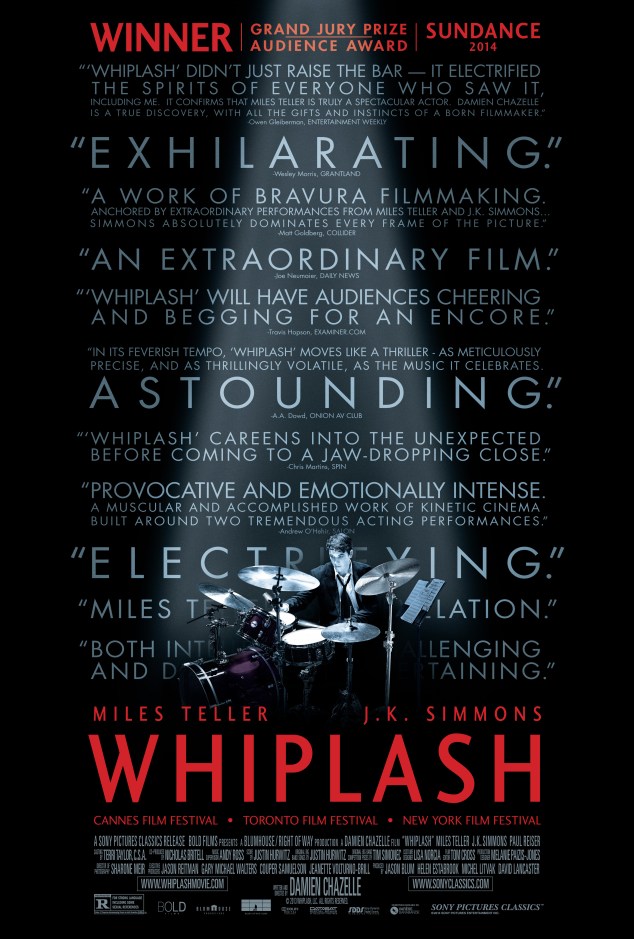
WHIPLASH_2.indd

Whiplash
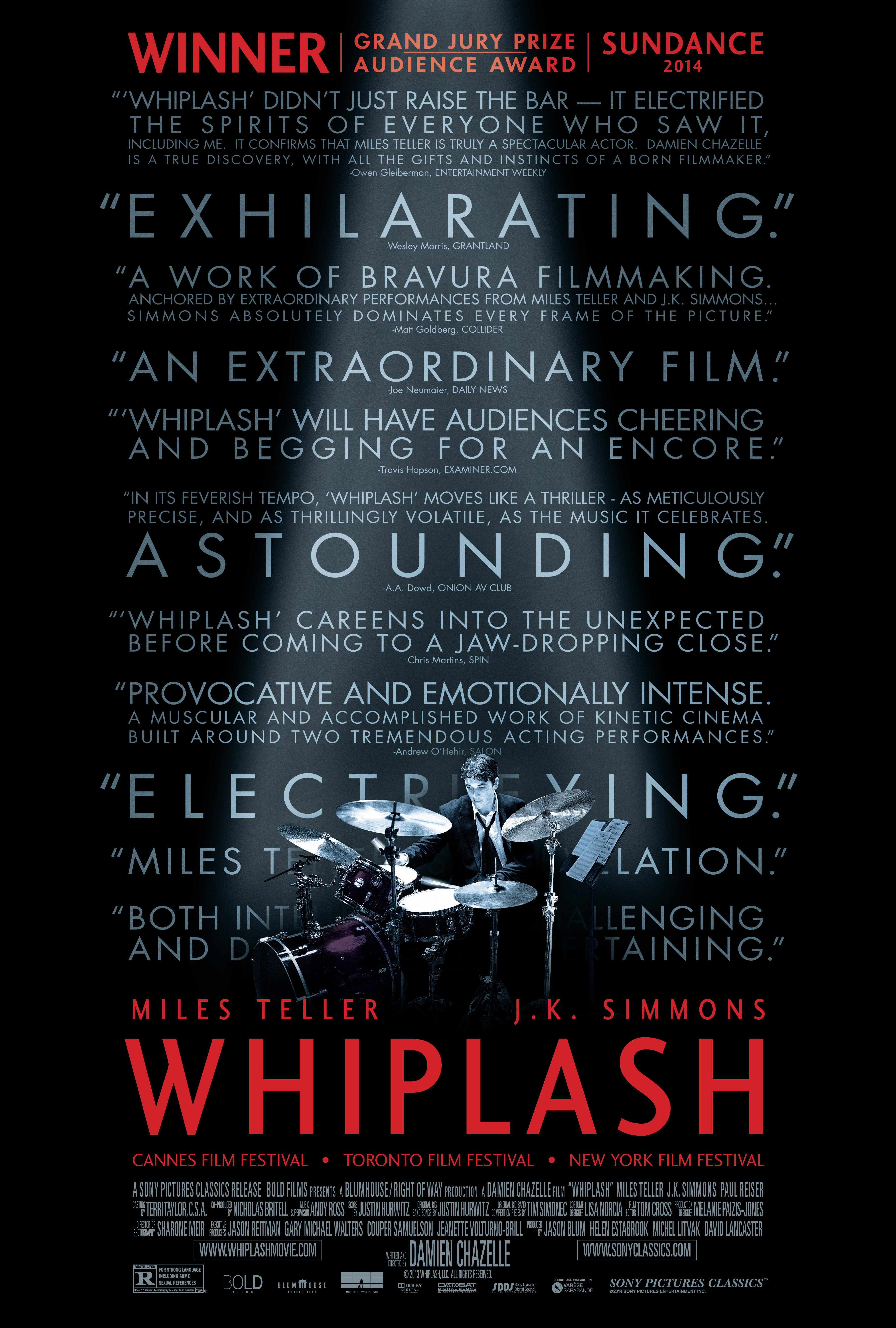
As I said in my last post, a movie that can make me angry enough to feel it in my stomach, that can shock me to the point where I’m yelling “Oh my God” out loud, and that can make me jump out of my seat in triumphant joy is really something special. Whiplash is that type of movie. J.K. Simmons, the Yellow M & M and the Farmers Insurance guy, J. Jonah Jameson and Juno’s father, is the band instructor from hell (not to mention an extremely relatable character to terrible people I’ve experienced in real life), and will deservedly walk away with the Best Supporting Actor Oscar. Miles Teller is awesome as a drum student worked to the point of exhaustion, with sweat, blood, and tears literally staining his drumsticks and the heads of his drums, and he reportedly did a lot of his own drumming on the film. The climax, a whirlwind of sound and close ups, is one of the best-edited sequences in a movie in a long time. Whiplash is definitely a painful and exhausting movie to get through, but, oh, is it worth it! And it is my favorite Best Picture nominee by a substantial margin from 2014.

May the best film win (though it probably won’t).

-Flipp
My Year In Pop Culture

Happy New Year, everyone!! My goal for 2015 is to blog more. Seven posts in 5 months is not too great, though I’d say it’s a decent start for someone somewhat lazy like me. So here’s to a year of at least  14-18 posts!!

Anyway, 2014 is over and I consumed a LOT of media throughout the year. Taking a page from Steven Soderbergh, I tried to keep track of everything new that I watched (and, as time went on and I found myself commuting to New York City two days a week, of all the books I read as well) in 2014.

My year in pop culture was as follows:

114. Rosemary's Baby

MOVIES

  1. American Hustle
  2. Hugo
  3. The Hunger Games: Catching Fire
  4. Braveheart
  5. Don Jon
  6. Her
  7. Frances Ha
  8. Frozen
  9. Inside Llewyn Davis
  10. Saving Mr. Banks
  11. Dallas Buyers Club
  12. Blue Jasmine
  13. Pineapple Express
  14. Raising Arizona
  15. Leaving Las Vegas
  16. Mitt
  17. The People vs. George Lucas
  18. Best Worst Movie
  19. Fantastic Mr. Fox
  20. Lost in Translation
  21. Juno
  22. Oslo August 31
  23. Eyes Wide Shut
  24. Captain Phillips
  25. All Is Lost
  26. (500) Days of Summer
  27. Filth
  28. Friday the 13th Part 3
  29. The Cable Guy
  30. Punch-Drunk Love
  31. The Life Aquatic with Steve Zissou
  32. Iron Man 3
  33. Thor: The Dark World
  34. Magnolia
  35. 42
  36. Great Expectations
  37. A Nightmare on Elm Street
  38. Philomena
  39. Nebraska
  40. The Pirates! Band of Misfits
  41. Moulin Rouge
  42. Hard Eight
  43. Lolita
  44. Stanley Kubrick: A Life in Pictures
  45. Gods and Monsters
  46. Barry Lyndon
  47. The Master
  48. Bottle Rocket
  49. The Reader
  50. Prisoners
  51. Mud
  52. 300: Rise of an Empire
  53. Grand Budapest Hotel
  54. That Guy…Who Was In That Thing
  55. 8MM
  56. Snake Eyes
  57. Point Break
  58. The Kids Are All Right
  59. Serpico
  60. Dog Day Afternoon
  61. Noah
  62. The History of the World Part I
  63. Joe
  64. Captain America: The Winter Soldier
  65. X-Men: Days of Future Past
  66. The Fault in Our Stars
  67. Sex Drive
  68. 22 Jump Street
  69. Jersey Boys
  70. Arthur Christmas
  71. Edge of Tomorrow
  72. America: Imagine the World Without Her
  73. Legend
  74. Saludos Amigos
  75. The Three Caballeros
  76. Make Mine Music
  77. Fun and Fancy Free
  78. Melody Time
  79. Battle Royale
  80. The Adventures of Ichabod and Mister Toad
  81. Boyhood
  82. Bernie
  83. Dawn of the Planet of the Apes
  84. The Family Man
  85. The Lego Movie
  86. The Ides of March
  87. Life Itself
  88. Snowpiercer
  89. Doubt
  90. Guardians of the Galaxy
  91. Good Will Hunting
  92. 12 Angry Men
  93. Jackass 3D
  94. Unbreakable
  95. The Serpent and the Rainbow
  96. The Skeleton Key
  97. The Sword in the Stone
  98. The Jungle Book
  99. Robin Hood
  100. Bonnie and Clyde
  101. The Princess Bride
  102. The Last Detail
  103. Bram Stoker’s Dracula
  104. The Horror of Dracula
  105. Shadow of the Vampire
  106. Insidious
  107. M*A*S*H
  108. Exorcist II: The Heretic
  109. The Exorcist III
  110. Cool Runnings
  111. The Last Picture Show
  112. Annabelle
  113. Gone Girl
  114. Rosemary’s Baby
  115. Poltergeist
  116. Trick ‘r Treat
  117. Exorcist: The Beginning
  118. Dominion: Prequel to the Exorcist
  119. John Carpenter’s The Thing
  120. All the President’s Men
  121. Nightcrawler
  122. Suspiria
  123.  [REC]
  124. Dracula Untold
  125. Interstellar
  126. Close Encounters of the Third Kind
  127. Birdman
  128. Deliverance
  129. Antichrist
  130. The Help
  131. One Direction: Where We Are
  132. Ida
  133. The Theory of Everything
  134. Seeking a Friend for the End of the World
  135. Foxcatcher
  136. The Hobbit: The Battle of the Five Armies
  137. Home Alone

24. The Leftovers S1

TV

  1. Doctor Who S4
  2. Sherlock S3
  3. Doctor Who S5
  4. Doctor Who S6
  5. House of Cards S2
  6. Hannibal S1
  7. Mad Men S2
  8. Mad Men S3
  9. Mad Men S4
  10. Mad Men S5
  11. Mad Men S6
  12. 30 Rock S5
  13. 30 Rock S6
  14. 30 Rock S7
  15. Mad Men S7P1
  16. Hannibal S2
  17. Game of Thrones S4
  18. Fargo S1
  19. True Detective S1
  20. Broadchurch S1
  21. The Legend of Korra S2
  22. 24 Live Another Day S9
  23. Doctor Who S7
  24. The Legend of Korra S3
  25. The Leftovers S1
  26. Twin Peaks S1
  27. Castle S1
  28. The Legend of Korra S4

12. Legion

BOOKS

  1. Preacher: Book One by Garth Ennis
  2. Difficult Men by Brett Marton
  3. The Man Who Was Thursday by G. K. Chesterton
  4. The Cuckoo’s Calling by Robert Galbraith
  5. The Killing Joke by Alan Moore
  6. Dracula by Bram Stoker
  7. The Giver by Lois Lowry
  8. Atonement by Ian McEwan
  9. The Leftovers by Tom Perrotta
  10. No Country for Old Men by Cormac McCarthy
  11. The Sign of Four by Arthur Conan Doyle
  12. Legion by William Peter Blatty
  13. Gone Girl by Gillian Flynn
  14. Dark Places by Gillian Flynn

I will have another post breaking down the 30 or so films released in theaters in 2014 that I saw before the Oscar Nominations come out on January 15. Overall, 2014 was an okay year for new movies (at least, according to this film curmudgeon over here): I liked a few, and hated a few, but most movies fell into a big ol’ MEH category. But I digress. Some notes on the various forms of entertainment I absorbed this year:

  • I really like Gillian Flynn’s writing style. Gone Girl and Dark Places were both fantastic, and I can only hope her first novel, Sharp Objects, is just as deranged. Did I say that? I meant good.
  • My last spring break as an undergrad consisted of me binging the HELL out of Mad Men and 30 Rock, and both shows quickly shot up my list of favorite shows ever. Don Draper and Jack Donaghy, you make me regret going into a profession where I can’t wear tuxedos after 6 PM or drink whiskey midday while doing business in my midtown Manhattan skyscraper…
  • After previously seeing Boogie Nights and There Will Be Blood, I rounded out the Paul Thomas Anderson oeuvre with Punch-Drunk LoveMagnoliaHard Eight, and The Master. So, for a short while until Inherent Vice came out, I had a perfect PTA score.
  • I watched 7 documentaries in 2014, and I can say great things about all of them. Life Itself and Mitt were both extremely charming, and Best Worst Movie made me appreciate the horror that is Troll 2 so much more than I ever did before. The People vs. George Lucas got me angry at George Lucas for messing up Star Wars and then made me feel sad for judging the man who created Star Wars in the first place, which is quite the feat. But Stanley Kubrick: A Life in Pictures takes the cake for my favorite doc and one of my favorite films that I saw all year. I have so much respect for that man, and really wish he made a few more movies before he died.
  • And speaking of Kubrick, Barry Lyndon may’ve been 3 hours long, but I enjoyed all 3 picturesque hours of it. The same goes for Eyes Wide Shut, about which I can’t help but agree with critic Jeremiah Kipp: “Misunderstood as a psychosexual thriller, Stanley Kubrick’s final film is actually more of an acidic comedy about how Tom Cruise fails to get laid.”
  • Apart from a two-minute window at the end that involved skeletons in a pool, Poltergeist was a huge, huge letdown. How it makes any “Best Horror Movie” list is totally beyond me. However, the same cannot be said for that other horror film to come out in 1982, John Carpenter’s The Thing. Those special effects, my God… I’ll take that over computer effects ANY day.
  • The 6 Disney films made during World War II, Saludos AmigosThe Three CaballerosMake Mine MusicFun and Fancy FreeMelody Time, and The Adventures of Ichabod and Mister Toad, are all one big blur to me. That’s, what…? about 7 1/2 hours of my life I will never, ever get back. Thank the good Lord for Cinderella, a film that brought Disney back to life.
  • Carrie Coon wins for my favorite female performer of 2014, as she was great in two of my favorites of the year, as scene-stealing Nora Durst in The Leftovers and as Ben Affleck’s grounded sister in Gone Girl. A close second is Cate Blanchett, winning her Oscar for Blue Jasmine and playing Galadriel in The Hobbit: The Battle of the Five Armies. I will forever watch whatever they next appear in.
  • Tom Hanks’ last five minutes in Captain Phillips should’ve won an Oscar in 2013, and he wasn’t even nominated. By far my favorite male performance of the year. In TV, I’d say Peter Dinklage for his rousing speech while on trial in Game of Thrones. Oh, and speaking of Game of Thrones
  • …poor, poor Oberyn Martell. Seven months later, and I’m still cringing. (His final words though are quite quotable. “YOU RAPED HER! YOU MURDERED HER! YOU KILLED HER CHILDREN!” served as a good intro for when I FINALLY saw The Princess Bride for the first time later in the year.)
  • Exorcist II: The Heretic was abysmal, but The Exorcist III was a scarily-good successor to The Exorcist, though it was much more of a religious-themed procedural than an outright horror movie. (Its book version, Legion, was my favorite book of the year, but more on that in a bit…) The two prequels, Exorcist: The Beginning and Dominion: Prequel to The Exorcist, were actually not that bad. The former was much more of a modern horror movie with a sillier plot, whereas the latter was much better acted but was much slower and had an awful exorcism as its climax; altogether, they were marred by terrible special effects and felt like two vastly-different, inferior halves of a whole, superior movie.
  • WHAT happened to The Legend of Korra? After a wonderful first season, seasons 2 through 4 were uneven, silly, and offensive to my senses as someone who enjoyed Avatar: The Last Airbender. That is not to say that the last three didn’t have any great moments (they had plenty, and, overall, 3 was very good), but still. Giant anthropomorphic kites? Jinora, the Deus Air Machina? Meelo in general?? And then the ending of the finale that everyone is praising, but was almost certainly just tacked on for the “Children’s Show Political Statement of the Year” award? And to top that all off, an Avatar in Korra (who had potential, mind you) who couldn’t even Avatar correctly after 4 friggin’ years!!! Ugh. Bad tastes all around.
  • And while it may not have been the BEST SHOW EVER like previous seasons, it was absolutely wonderful to see Jack Bauer once again grace my television screen in 24: Live Another Day after a 4 year absence. Oh, how I missed him!! Hopefully, it won’t be the last we ever see of him, but if it is, it was a much better send-off than the original finale from 2010, and the image of Jack throwing Evil Catelyn Stark out of a window in cold blood rivals any of the Jack Bauer Moments from 24‘s original run.
  • Thank God for Good Reads. After having it recommended to me over the summer, I increased my reading output from 2 books through July to 14(!!) by the end of the year. My commute to New York helped, but still. It gave me a purpose to sit down and start reading again. After all, I do love keeping track of movies and books with lists…
  • My least favorite movie of the year was probably M. Night Shyamalan’s Unbreakable. How anyone can still let this man get behind a word processor, let alone a camera, is totally beyond me. Noah and Her also drove me a little insane inside as well. And let’s not even talk about Jackass 3D (which I was forced to watch at a friend’s house. Pleeease don’t judge me.) 
  • My least favorite TV show had to be the second season of Korra (see three bullets above for reasons why) followed immediately by the second season of House of Cards – how do you squander so much promise, especially after that first episode?? My least favorite book was Tom Perrotta’s day-in-the-life of those dealing with the Rapture novel, The Leftovers, which unfortunately was because I read it shortly after watching and loving its vastly different, superior HBO adaptation…
  • …which brings me to my final note, my three favorites in their respective mediums: Rosemary’s Baby for movies, The Leftovers for TV, and Legion for books. All three had religious themes (albeit dark, disturbing religious themes) and I guess having that description alone already piques my interest beyond most other premises. It just so happens that their execution and delivery exceeded my expectations in all three cases.
    • Rosemary’s Baby has quickly become one of the more disturbing movies that I have ever seen, and some of its images and dialogue are seared into my brain. I watched it in a college class and there were snickers during the finale when the film’s antagonists proclaimed their love for a certain devil figure, but I was anything but laughing. I was immensely impressed by the acting and Polanski’s direction, and am still surprised by the amount of violence, sex, and nudity in it. Compared to, say, Bonnie and Clyde, another film from the late 60s that was super controversial when it came out, it actually lived up to its reputation for being risqué and ground-breaking. It is certainly a movie I won’t be forgetting anytime soon.
    • I mentioned above that I enjoyed The Exorcist III, which was William Peter Blatty’s own adaptation of his Exorcist sequel, Legion. As I did with most of the books I read this year, I picked Legion up AFTER having already watched its film adaptation. And while I know the studio insisted Blatty call his film The Exorcist III and even tacked on a somewhat pointless exorcism scene to the end of the movie (that still wasn’t that bad to derail quite a scary little flick), Legion was vastly different from its movie version, even though Blatty wrote the screenplay and directed the movie. While the film was a procedural with horror elements and that added exorcism scene, the novel was a procedural with horror elements…and a LOT of philosophical and religious discourse. For a Jewish detective, Lt. Kinderman, certainly did a lot of hanging around with Catholic priests and discussing of the Catholic faith, and spent a lot of time chasing religious murderers and ruminating on the nature of good and evil and man’s purpose in it all… Oh, I loved it. And the actual conflict of the book had a much more low-key, emotional resolution than its bloody, excessive film counterpart. Kinderman is now one of my favorite literary characters. Mr. Blatty, any chance you can add a third Kinderman novel to your works?
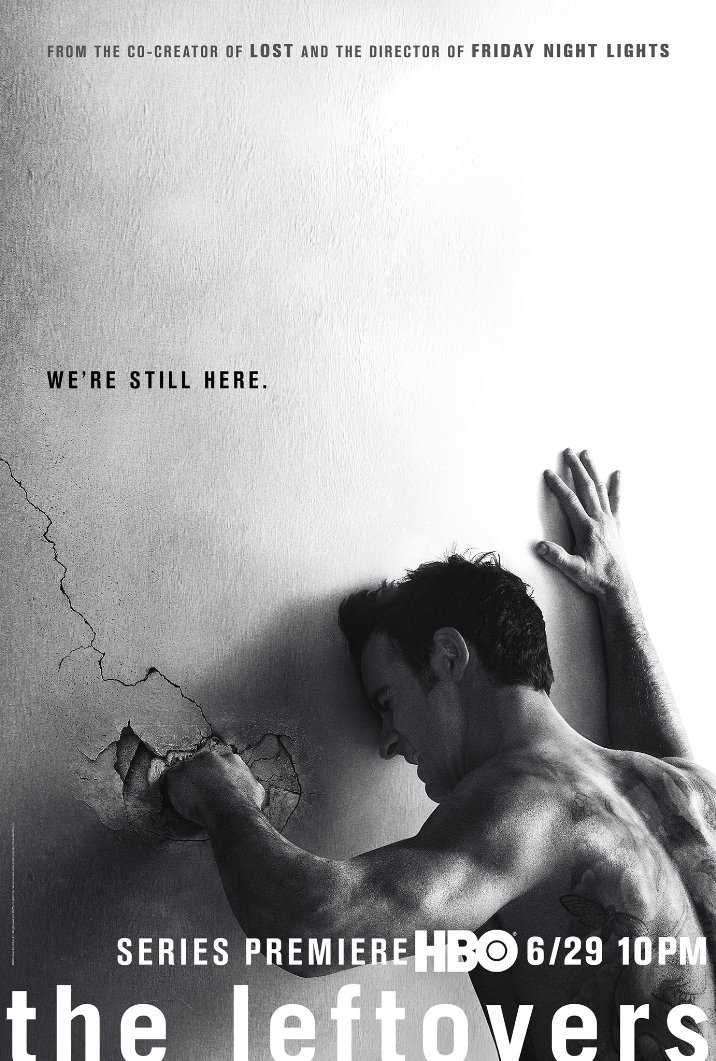
    • And that brings me to The Leftovers… I still honestly can’t put my feelings about the show into words. I’ve wanted to blog about 15 different things regarding the show and the book (more on that in just a second) frequently since July when it premiered, but I couldn’t put any of my thoughts down on paper. I’ve just never been as emotionally affected by a show as I was with The Leftovers. The show’s ability to get into the heads of the characters and to play with structure certainly helped make its depressing and bleak themes and setting radiate beyond what we saw on screen. I loved the pilot, but it was the third episode that followed Christopher Eccleston’s Reverend Matt Jamison around as he fought to save his church from foreclosure that made me realize I was watching something I’d never seen before. And then Carrie Coon, playing Matt’s sister Nora, had her own, solo episode and stole the show out from under what was already an amazing cast. No, not all the questions raised were answered, and a vast conspiracy seemed to be hinted at towards the end of the show, but that’s what Season 2 is for. The main arc featuring Justin Theroux’s family reached an apt conclusion by season’s end and that was fine with me. Its book counterpart never reached the scope of the show and answered even far less questions, which actually begged me to ask, “What was the point of this book?” And apart from the initial premise, a few character names and one or two scenes here and there – including the final scene of both the show and the book, the two forms of The Leftovers were entirely different entities. And the book didn’t have Max Richter’s hypnotizing score or Coon or Eccleston or Amy Brenneman (who is also superb in an almost entirely-silent role) or the sheer violence that opened up episode 5 or the stolen Baby Jesus, or the packs of killer dogs and their mysterious hunter, or Garvey’s crazy father, and so on and so forth… Therefore, I was severely disappointed by Perrotta’s novel and came to love the show even more while reading it. I can’t wait for Season 2 and I hope it’s just as thought-provoking and mysterious as the first.

Oh, and the sleeper hit of the year that probably had a major impact on my subconscious and might have actually changed my life? A crappy little comedy I saw at 3 am one summer night on Spike or FX or something called Sex Drive.

-Flipp

Jurassic World: Standing on the Shoulders of Geniuses

Over the last few blog-less months, I have had numerous ideas for posts, but I haven’t been sold on a compelling-enough idea or subject to actually sit down and write.

Thank you, Jurassic World, for helping me overcome my writer’s block…

If you only need to know one thing about me, it is that Jurassic Park is my favorite movie of all time. I watched it more than any other movie growing up and loved everything about it. I became obsessed with dinosaurs like any other 4- or 5-year-old boy, but it was more than just finding the dinosaurs cool or scary or awe-inspiring; the filmmaking itself attracted me, even as a kid. The acting, the dialogue, the quirkiness of Jeff Goldblum, the Britishness of Richard Attenborough, John Williams’ majestic score, the way Spielberg keeps the audience in the dark by lingering on Sam Neill’s and Laura Dern’s surprised faces rather than the dinosaurs they are seeing for the first time, the kitchen scene…. the movie is etched in my brain. I even blame Jurassic Park for my bigotry towards those in the “blood-sucking” law profession! (Sorry, but you don’t leave two children in a car when a T. Rex is on the loose, no matter how badly you “gotta go”…)

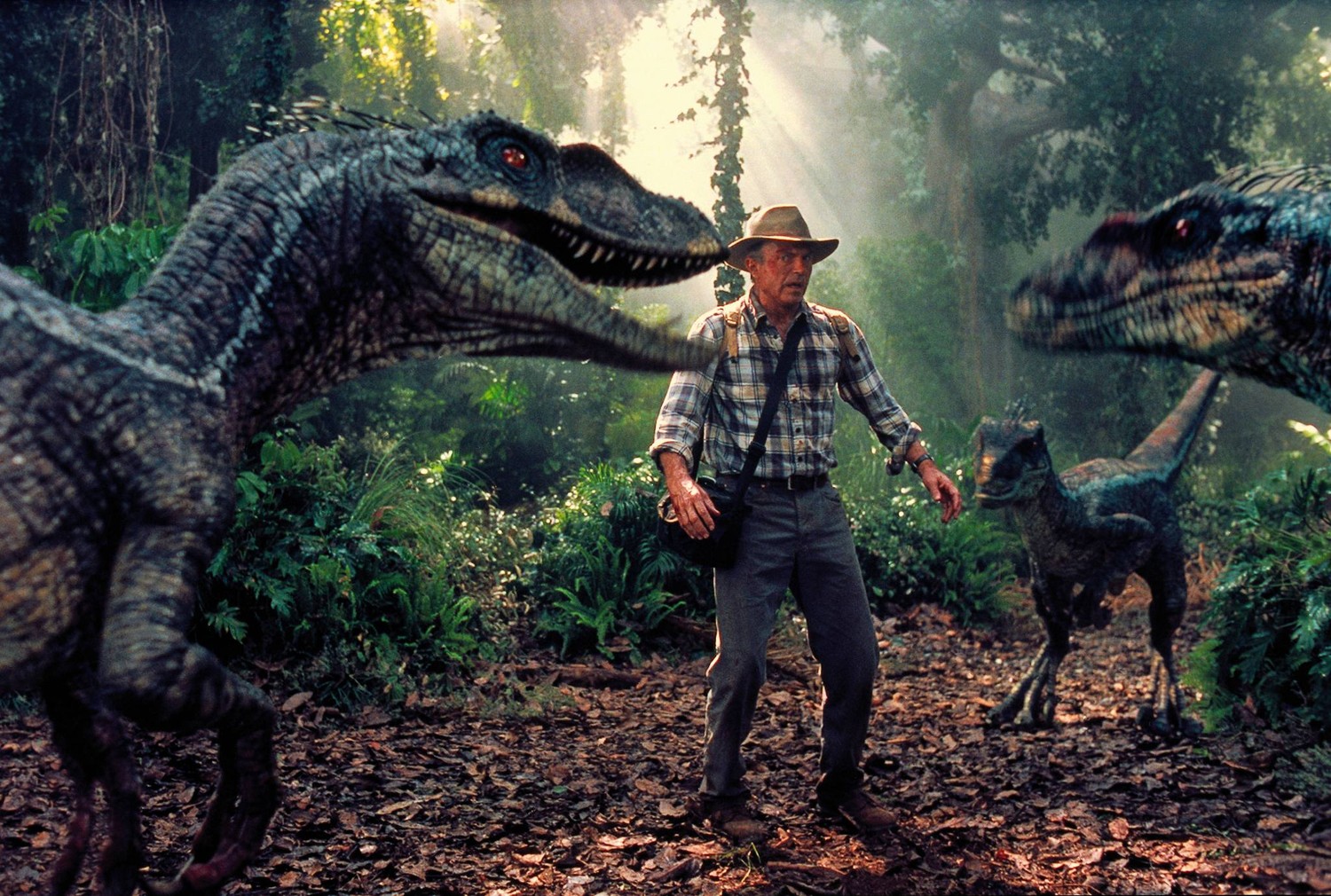
Jurassic Park‘s two sequels, 1997’s The Lost World: Jurassic Park and 2001’s Jurassic Park III, are both…well, they’re both quite bad. I did enjoy them to a point as a child, but over the years any sort of warmth that I had towards them has all but cooled.

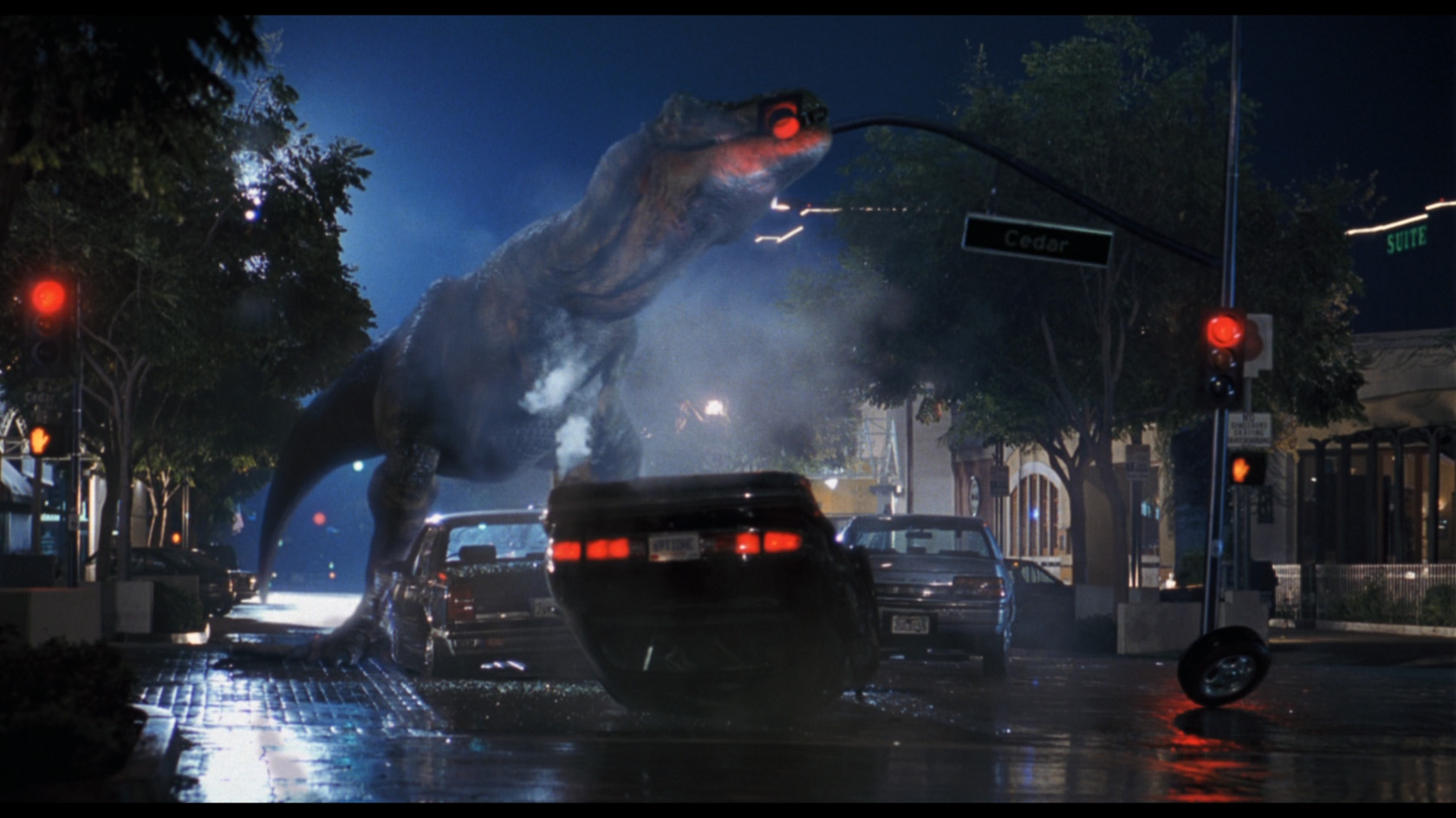
What did San Diego ever do to you, Spielberg?

Can "Jurassic World" be worse than this? Probably...

Can “Jurassic World” be worse than this? Probably…

However, both sequels, while sorta-kinda-really sucking, still managed to share some similarities with the first film. From Jeff Goldblum and Sam Neill returning in The Lost World and III, respectively, to the use of John Williams’ music, to similar shot composition and locations, to a reliance on animatronics and models in addition to some(!) computer-generated imagery, the sequels still contained a little bit of what made the first Jurassic Park film so great.

Jurassic World though…

Based SOLELY on Jurassic World‘s first trailer, this third sequel, coming 14 years after III and 22 after the first, looks like an alien trying to assimilate with something that has been familiar to us for decades…

Actually, as a good friend pointed out to me yesterday, it is literally Alien-in-Jurassic-Park.

A genetically-modified creature (so it’s not even a real dinosaur, just some monster?) escapes from a fully-operational theme park containing dinosaurs. And these dinosaurs include seemingly-trained velociraptors (WHAT?). Add in Chris Pratt (I guess he’s better than Shia LeBeouf), B.D. Wong (the one returning cast member from any of the first three Jurassic Park films, so a silver lining, I guess?), and a TON of crappy CGI (dinosaurs, dinosaur-monsters, dinosaur-shark-monsters, as well as locations, scenery, and backgrounds), and you get….whatever the hell this is.

It’s certainly not a Jurassic Park movie.

It’s as if Hollywood took a page out of John Hammond’s book….

Just because you have the power to do something, DOESN’T MEAN YOU SHOULD DO IT.

Take it away, Ian Malcom:

And I thought I was a bit put out by Star Wars: The Force Awakens… At least that film might not be the most disappointing “unnessesary-sequel-to-a-beloved-movie-from-Flipp’s-childhood” that comes out in 2015 now. Sheesh.

-Flipp


A Brief Post on Robin Williams

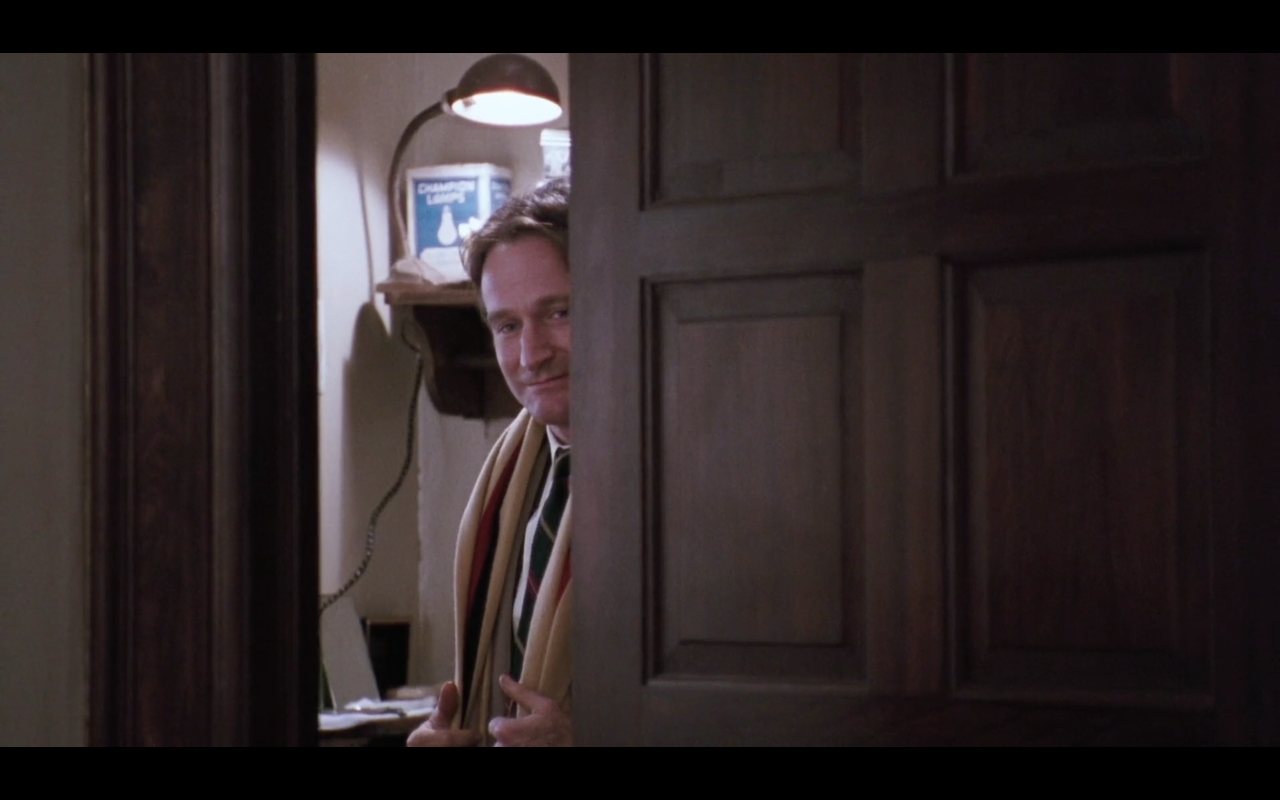
I don’t entirely know what to write on the subject and there has been plenty already written about it over the past two days; all I can say is Robin Williams was truly one of the funniest and most talented actors and comedians around, able to put a smile on people’s faces even when he could not manage one himself. His suicide is a sad, sad thing, and while countless other, smarter people can write about his depression, past addictions, and other demons, I would just like to say thank you to the man who played a large role in my childhood with his manically enthusiastic performances in Aladdin, Jumanji, and Flubber, and who taught me the lessons of perseverance, individuality, and sticking up for what is right in one of the most hauntingly beautiful films of all time, Dead Poets Society.

Now, any line from Dead Poets Society is worth quoting, but I will end this very brief post with this monologue (powerfully used in a recent iPad commercial) from one of Mr. Keating’s English classes:

We don’t read and write poetry because it’s cute. We read and write poetry because we are members of the human race. And the human race is filled with passion. And medicine, law, business, engineering, these are noble pursuits and necessary to sustain life. But poetry, beauty, romance, love, these are what we stay alive for. To quote from Whitman, “O me! O life!… of the questions of these recurring; of the endless trains of the faithless… of cities filled with the foolish; what good amid these, O me, O life?” Answer. That you are here – that life exists, and identity; that the powerful play goes on and you may contribute a verse. That the powerful play goes on and you may contribute a verse. What will your verse be?

O Captain! My Captain! Rest in peace.

Screen Shot 2014-08-13 at 7.06.45 PM


A Film Curmudgeon’s Lament: or, How I Saw “Guardians of the Galaxy” and Didn’t Really Care For It

I guess, subconsciously, my goal in life is to become as close to New York Post film critic Kyle Smith as possible.

I saw a little movie called Guardians of the Galaxy yesterday morning, and following my recent trend of completely not caring for a movie that almost everyone else – critics, film buffs, and the average moviegoer alike – has loved and praised, I left the theater neither moved nor disappointed by the film that has a 92% rating on Rotten Tomatoes.

There is a point toward the end of the movie where deep-voiced, hooded, staff-wielding supervillain Ronan (which is all I can remember about him) raises his arms mockingly and asks a crowd of scared spectators something along the lines of “This is it? Your guardians of the galaxy?” and I found myself agreeing with him completely.

Really? This is the best blockbuster of the summer? What I’ve seen in headlines referred to as “Marvel’s Most Important Movie”?

I just don’t get it.

GuardiansOfTheGalaxy

Now, I didn’t hate Guardians of the Galaxy. I can’t even say I disliked it. I laughed at some of Rocket’s lines, and generally appreciated Drax the Destroyer and his inability to understand metaphors, and immensely enjoyed that one Jackson Pollock reference…

But I did not care about the plot. About the race of Xandarians or whatever that Ronan was supposedly going to wipe out. I didn’t care about Benicio Del Toro’s cameo as The Collector, which tied into Thor 2 and I’m guessing ties into The Avengers 2 and other upcoming Marvel movies, and I didn’t care about the forced love story between Chris Pratt’s Peter Quill/Star Lord and Zoe Saldana’s Gamora. And then, once the film erupted into an excess of explosions and lasers and CGI ships and dizzying maneuvers in the climactic battle to board Ronan’s ship, my brain kinda-sorta just checked out.

In this regard, Guardians of the Galaxy might as well have been titled Star Trek 3, as it felt exactly like J. J. Abrams’ reimagined, spectacle-filled, and ultimately soulless Star Trek, only this time with some Star Wars-esque clothing and sets. Chris Pine- I mean, Pratt’s womanizing, goofy scoundrel, Zoe Saldana as a hard-ass with a soft spot for said roguish space adventurers, an alien whose humor comes from not being able to understand human emotions and insinuations, and the growling, brooding, cookie-cutter alien of a supervillain out to disintegrate planets for some unknown or boring reason…need I go on? I can only PRAY Star Wars VII is not this generic.

Overall, Guardians of the Galaxy ties into my slight (and I mean slight) disdain with Marvel’s Cinematic Universe, which, while having a remarkable track record of producing a string of decent-to-good films without any major bombs, is all about the end game rather than the movies being made and released “in the moment.” Because Marvel has mapped out its movies for the next ten or so years, each movie released is somehow meant to tie into one, two, or five movies down the road. While admittedly cool to see coherence and a broad sense of continuity between films, as well as all the character crossovers and inside jokes and references to other films, it gets a little tiresome when you realize that none of the films can really stand on their own, and that when you do watch, say, The Avengers in the objective context that five or six other films had built up to this point, you’re almost guaranteed to think “Wait, that’s it? After ALL that?” Yes, these movies are all enjoyable on a superficial level, but think how much deeper they would be if focus were put on each individual film that together naturally build to a crossover film. This crossover would then serve as a compliment to the films that preceded it rather than the end goal of the franchise. Maybe DC can do what Marvel has been unable to– Oh wait. Batman v Superman: Dawn of Justice.

facepalm

As for my dwindling taste in movies, let me not stop with Guardians of the Galaxy. Just so people reading this post are even more upset with me, I will admit that this is the third highly-praised film that I have felt “meh” about in the last month alone. Guardians follows in the footsteps of Dawn of the Planet of the Apes and Boyhood (both also over 90% fresh on RT), but I would honestly say that I enjoyed Guardians a lot more than the latter two.

So… Am I just wrong? Or is everyone else wrong? Either way, I feel cursed, like I somehow found a chest full of Aztec gold that makes me indifferent to current universally-acclaimed movies.

All I know is that next time I decide to go to the movies, before I step foot into the theater, I need someone to ask me, ” Is spending $12 or $7 or even $1 worth it for a movie that will most likely disappoint you?” and then hit me if I answer “Yes.” Please and thank you. You will forever have my gratitude.

– Flipp

Doubt

Philip Seymour Hoffman and Amy Adams in 2008’s Doubt

I’ve been debating what my first ACTUAL movie review for this blog should be: I could follow up my Disney Challenge Intro with my promised review of the Disney “Classical Era” films, or I could hold off on that for a little while longer and write about one of this year’s movies, such as Boyhood, The Lego MovieSnowpiercer, or Life Itself, all of which I’ve seen over the last month.

Instead, I shall do neither.

Instead, I am going to write about a 6-year-old movie that I just saw for the first time last week.

2008’s Doubt, self-adapted from John Patrick Shanley’s 2004 play of the same name, combines two things near and dear to me: great acting and Catholicism. Surprisingly, the Catholic nature of Doubt is treated objectively and respectfully, even amid its heavy subject matter, which is quite rare in a mainstream Hollywood movie. As an added bonus, Doubt features the late, great, and sorely-missed Philip Seymour Hoffman in a supporting role just morally ambiguous enough to leave the audience’s sympathies conflicted, resulting in a very tense and powerful movie experience.

Set at a Bronx Catholic church and school in 1964, Doubt tells the story of an alleged case of sexual abuse, although this serves as a plot point rather than the underlying theme of the film. Crotchety, strict Sister Aloysius (Meryl Streep) warns her younger, more liberal nuns to watch out for any misdoings around the parish or school after warm-hearted Father Brendan Flynn (Hoffman) gives a particularly striking sermon on the nature of doubt. Young, naive Sister James (Amy Adams) notices Father Flynn’s distinct attachment to new student Donald Miller, the only black boy in the school. After catching the boy with alcohol on his breath after a private meeting with the priest, she goes to her superior, who then makes it her “though-I-be-damned-to-hell” mission to find out the truth behind Father Flynn’s relationship with the boy. The battle of wills that ensues between Streep and Hoffman yields results and changes at the church, but not necessarily those one would expect. It also brings into question the film’s main theme, clearly outlined in the film’s opening minutes (oh, yes, and by its title), doubt, as well as the consequences of being resilient to the point of intolerance.


The four main leads, Streep, Hoffman, Adams, and Viola Davis as Mrs. Miller, the alleged victim’s mother, are outstanding, and all deservedly received Oscar nominations at the 2009 Academy Awards. Amy Adams exudes an innocence that struggles with the strictness of her surroundings, especially the overbearing, miserable presence of Sister Aloysius. She loves her students and is optimistic to the point where she cannot believe that Father Flynn would be a pedophile, let alone lie about it, even though she subconsciously must have had misgivings as she brought Flynn’s suspicious activity to the attention of Streep’s character. When she finally breaks under the pressure of the events encircling her and lashes out at a talkative, but innocent, student in her class, we can see the pain in her eyes as she realizes that she has gone too far. She is not ready for a cynical world where pain and suffering are very real.

Viola Davis, in a single 11-minute scene (her only other appearance is a single, silent shot of her face near the film’s end) is devastating as a mother caught between a rock and a hard place, suffering in a marriage to a violent husband who disapproves of his son while holding onto the hope that graduating from a good Catholic school will lead to better high school placement for Donald and a chance at college after that. Streep’s look of incredulousness at Davis’s tear-stained refusal of help is haunting. Streep, in what was her 15th Oscar nominated-role, is formidable, bitter, and stern, but after Adams’ revelation about the possibility of abuse, we as the audience begin to see her human side, and – without spoiling anything – by the film’s end, she is very human. Her quest for the truth is insatiable after this point, and she drives the remainder of the movie as she moves to take down Father Flynn.

Hoffman, especially now, 6 months after his untimely and unfortunate death, is a sight to be seen, even in the subdued, mostly-background role of Father Flynn. The seemingly-boisterous and friendly Father Flynn remains a mystery for most of the movie, only taking the forefront early on in the film in a few brief scenes revolving around his cryptic homilies at Mass; the only instances we gleam of him elsewhere are through the eyes of the two suspicious sisters, and his (admittedly suspicious) actions, such as showing the boys’ basketball team his long fingernails during a practice that he is coaching, or giving Donald a hug of reassurance in the hallway after a bully knocks his books out of his hands, can be construed to be entirely innocent or subtly malevolent. It is during the climactic confrontational scene in which he goes head to head with Streep that Hoffman finally has enough to do and say to warrant his Oscar nomination. His incredulity at Sister Aloysius’ allegations and her refusal to believe in his innocence, contrasted with his look of terror when she claims to have unearthed information regarding his last assignment at another parish, solidifies Father Flynn’s ambiguous nature, and ultimately leads to the fulfillment of the film’s treatise on the idea of doubt.

Is Father Flynn guilty? Does Sister Aloysius have proof of past misconduct? Is it enough to force Father Flynn out of his church? Or is she committing a witch hunt based on personal misgivings for change, the Church’s patriarchy, and Frosty the Snowman? Again, I don’t want to spoil Doubt’s ending because I highly recommend it to anyone who respects a fine Meryl Streep performance, misses Philip Seymour Hoffman, enjoys seeing Amy Adams in a wimple, or has a knack for old-school Catholicism like me. It is definitely worth the watch.

(And thank you, Google, for informing me that wimple is the correct term for “nun hat.” You learn something new every day.)

– Flipp